
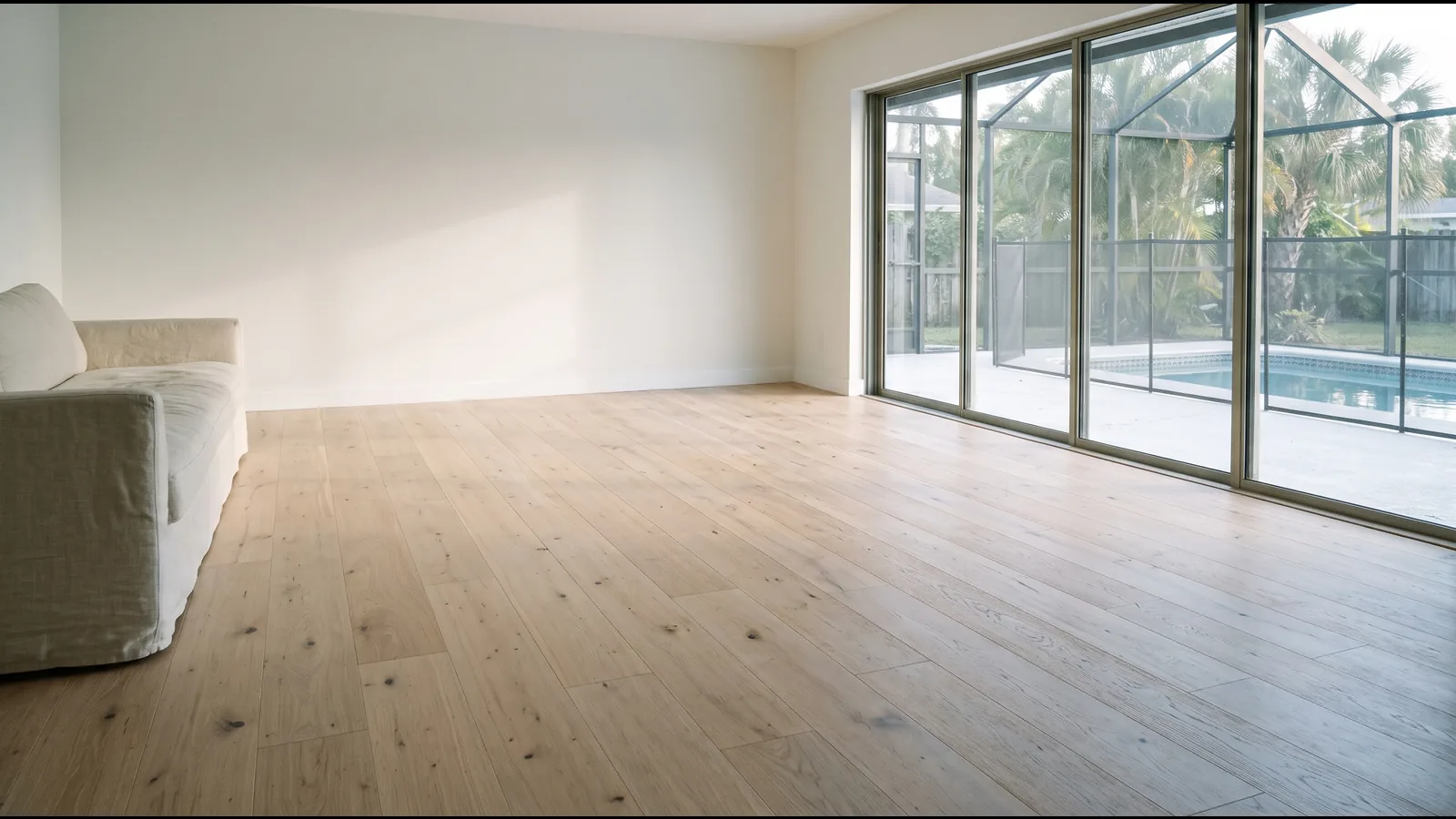
White Oak Flooring Cuts, Widths and Origins
Two white oak floors can look and behave quite differently depending on how the log was sawn, how wide the boards are and which continent the tree grew on. These are the choices that change the quote.
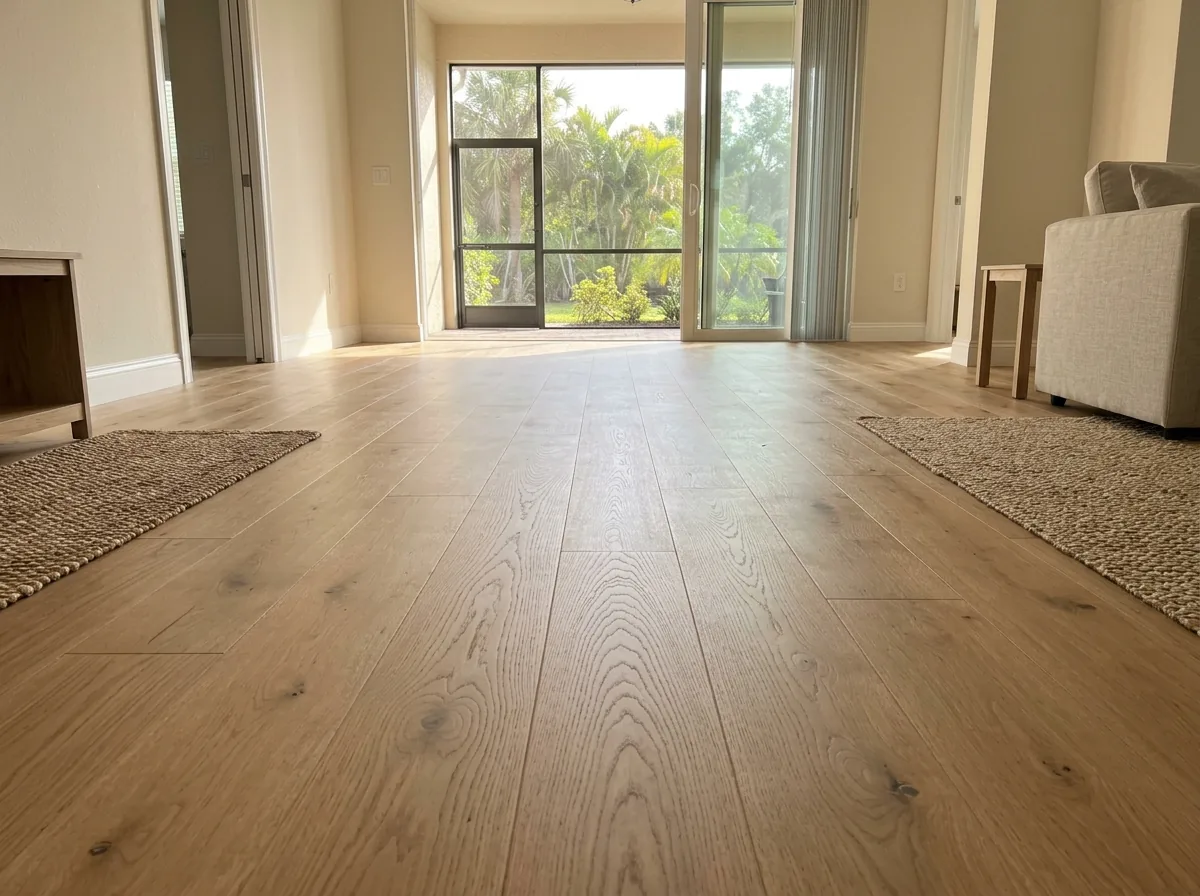
Plain-sawn white oak
Plain-sawn (also called flatsawn) boards are cut with the growth rings roughly parallel to the face, which gives the wide, curving "cathedral" grain most people picture. Bob Vila lists it as the most affordable cut. It is also the one that moves most. This Old House says flatsawn boards expand and contract much more with humidity and are the more likely to cup in summer and gap in winter. The Wood Database says white oak's shrinkage leaves it with "mediocre dimensional stability, especially in flat sawn boards." In a humid summer that argues for keeping the AC on, even in a house left empty for the season.
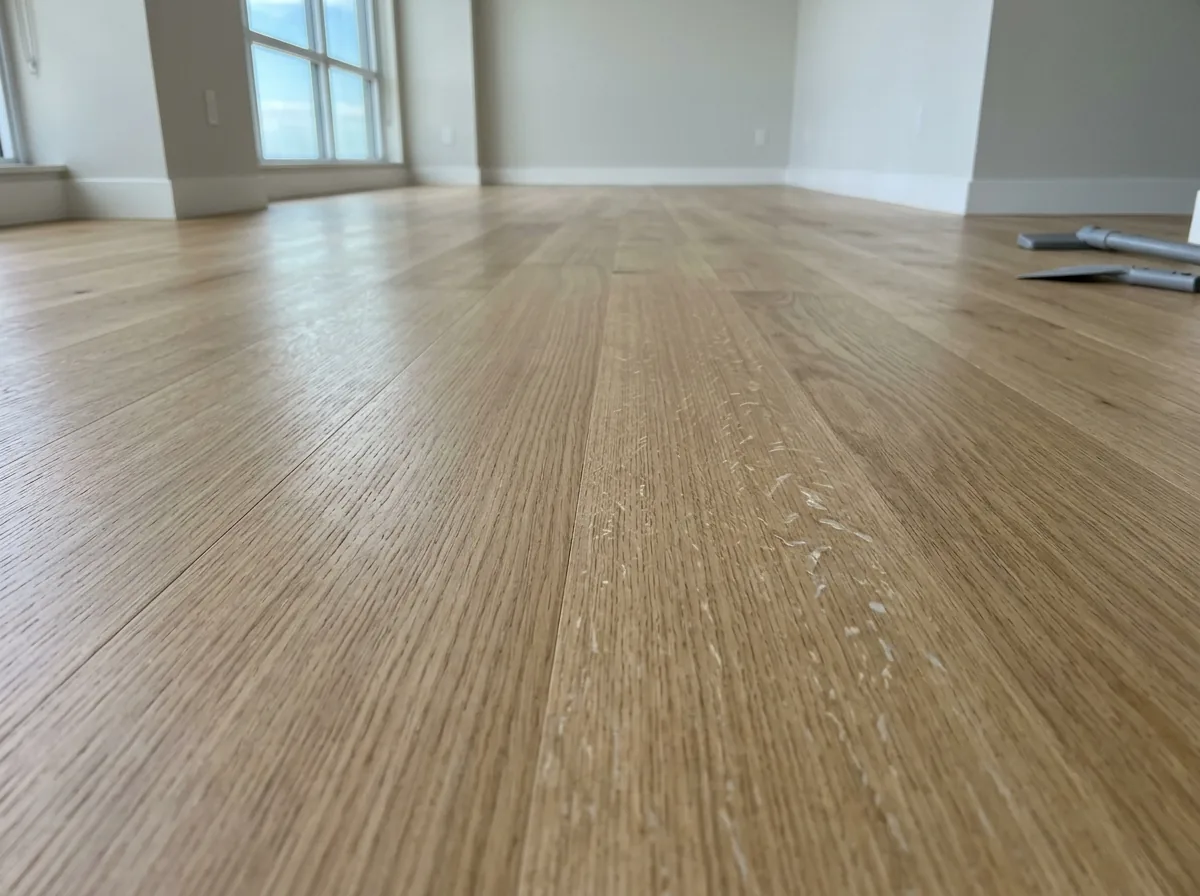
Rift and quartered white oak
Quartersawn and rift-sawn boards have their rings running close to perpendicular to the face. The grain comes out straight, even and narrow, and quartersawn faces often show the silvery ray flecks white oak is known for. This Old House rates quartersawn the most stable cut, and Bob Vila confirms both cost more than plain-sawn. Quotes often lump them together as "rift and quartered," so ask whether you're getting a mix or one cut alone: rift shows straight lines, quartered shows the flecks.
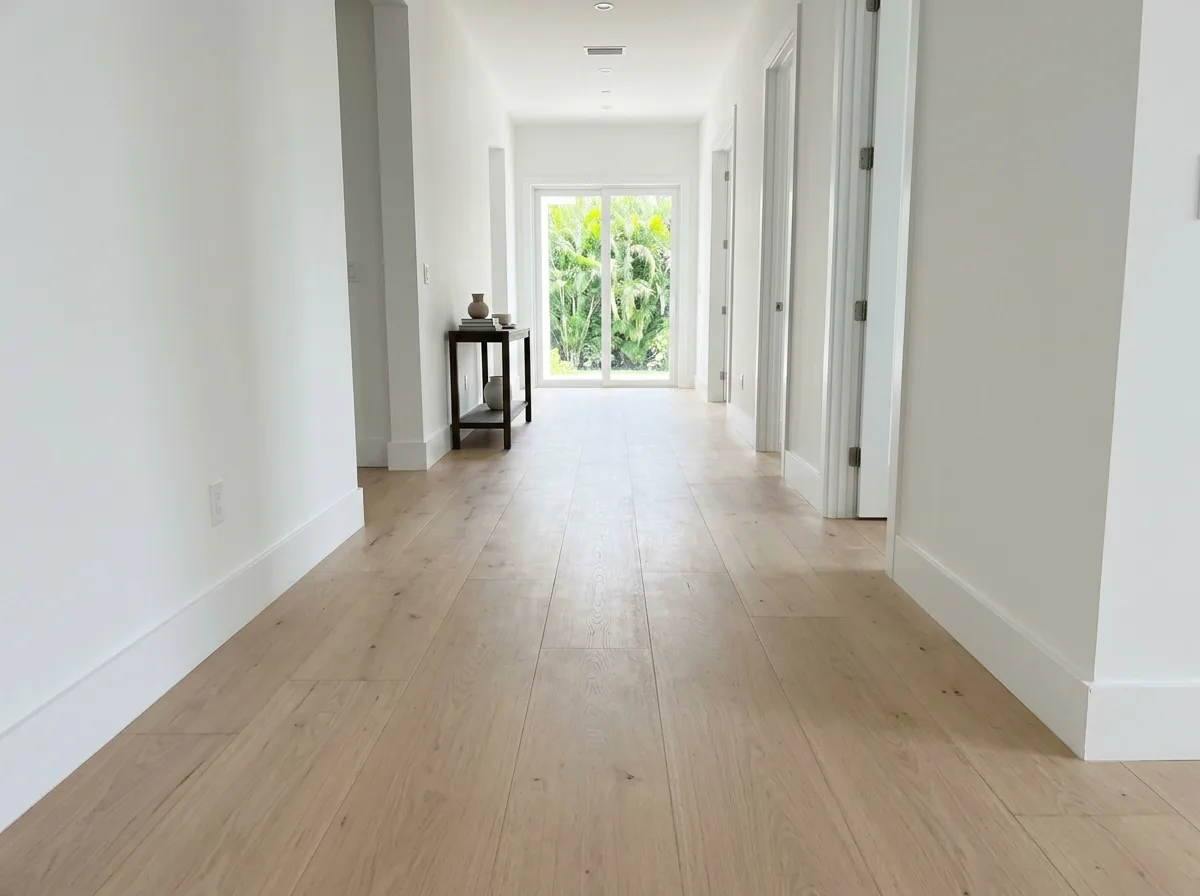
Wide-plank white oak
Wide boards show more grain and fewer seams. They also have less room for error: boards over about 3 inches need a tighter moisture match with the subfloor before they go down (acclimation rules). Fixr notes long strip and wide plank can raise the price through extra material cost. On a slab, engineered planks with a white oak face are the safer route (why). Ask for the plank width and the wear-layer thickness in writing.
European vs American white oak
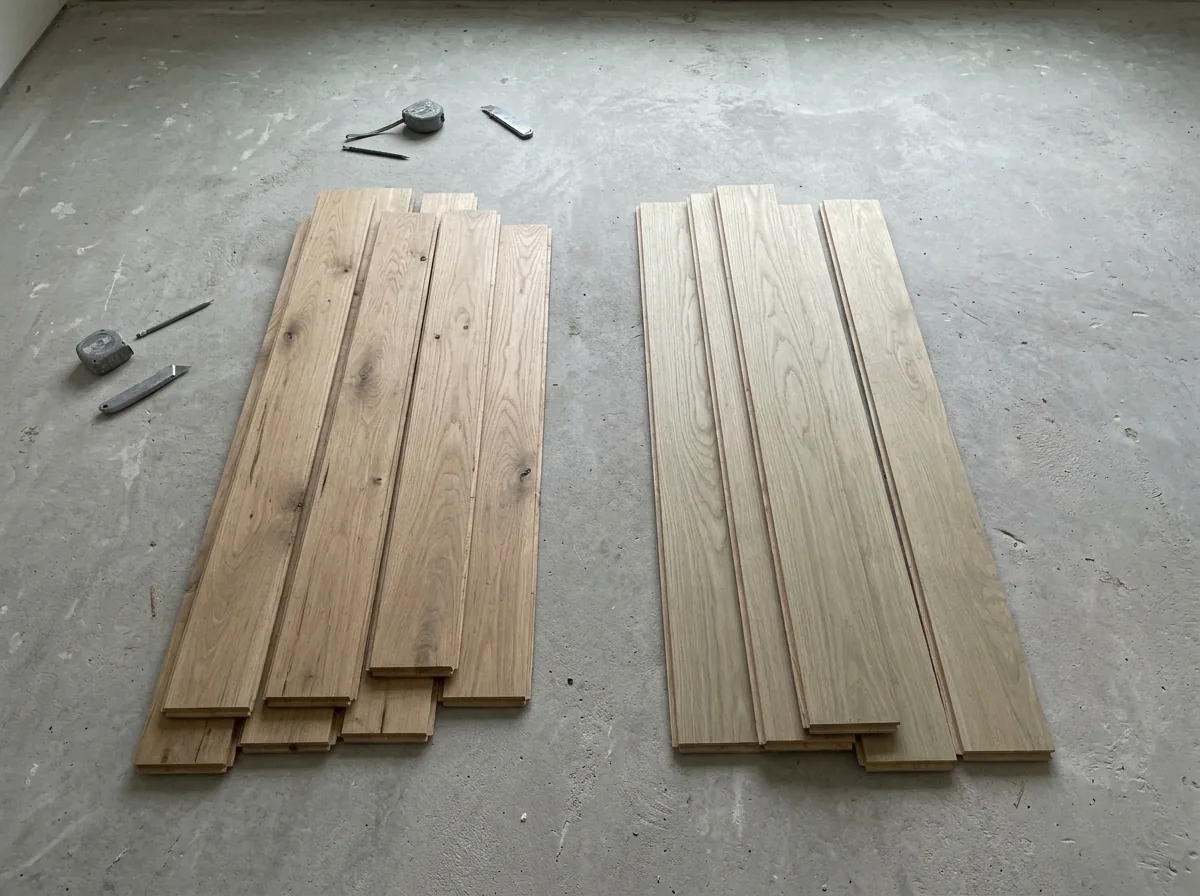
"European white oak" is a different tree from the American kind. The Wood Database lists European oak as Quercus robur, Janka 1,120, against 1,350 for American white oak, Quercus alba. So the European boards rate a bit softer. The name tells you origin and species, not quality. If a quote just says "white oak," ask which one.
Red oak, the usual comparison
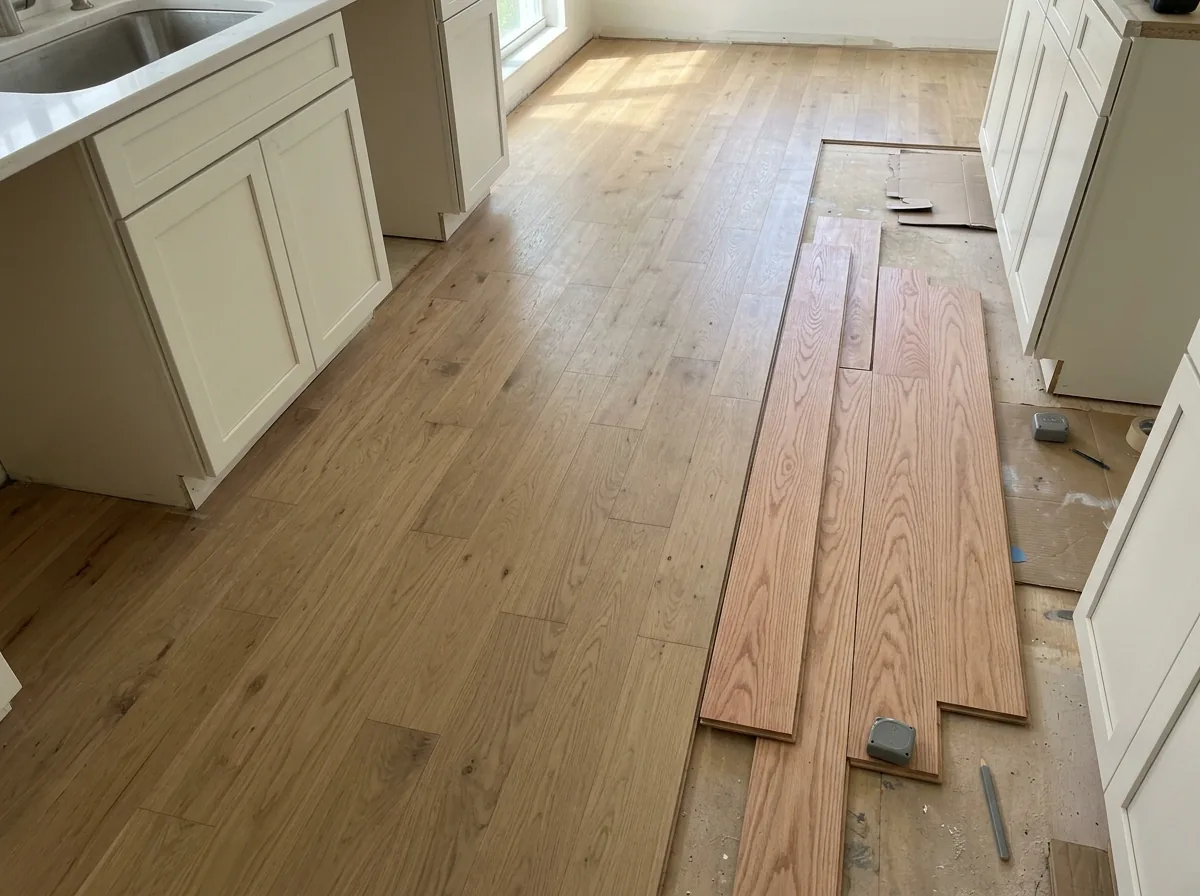
Red oak is the cheaper sibling: HomeGuide lists it at $5 to $10 a square foot against $6 to $12 for white oak, and the Wood Database says white oak usually costs slightly more. Water is where they split. White oak's pores are plugged with tyloses, it is rated very durable, and it has long been used for boats and barrels. Red oak lacks tyloses, is rated non-durable, and can stain where water sits on it. Near a slider, a kitchen sink or a pool door, that difference is worth paying for.
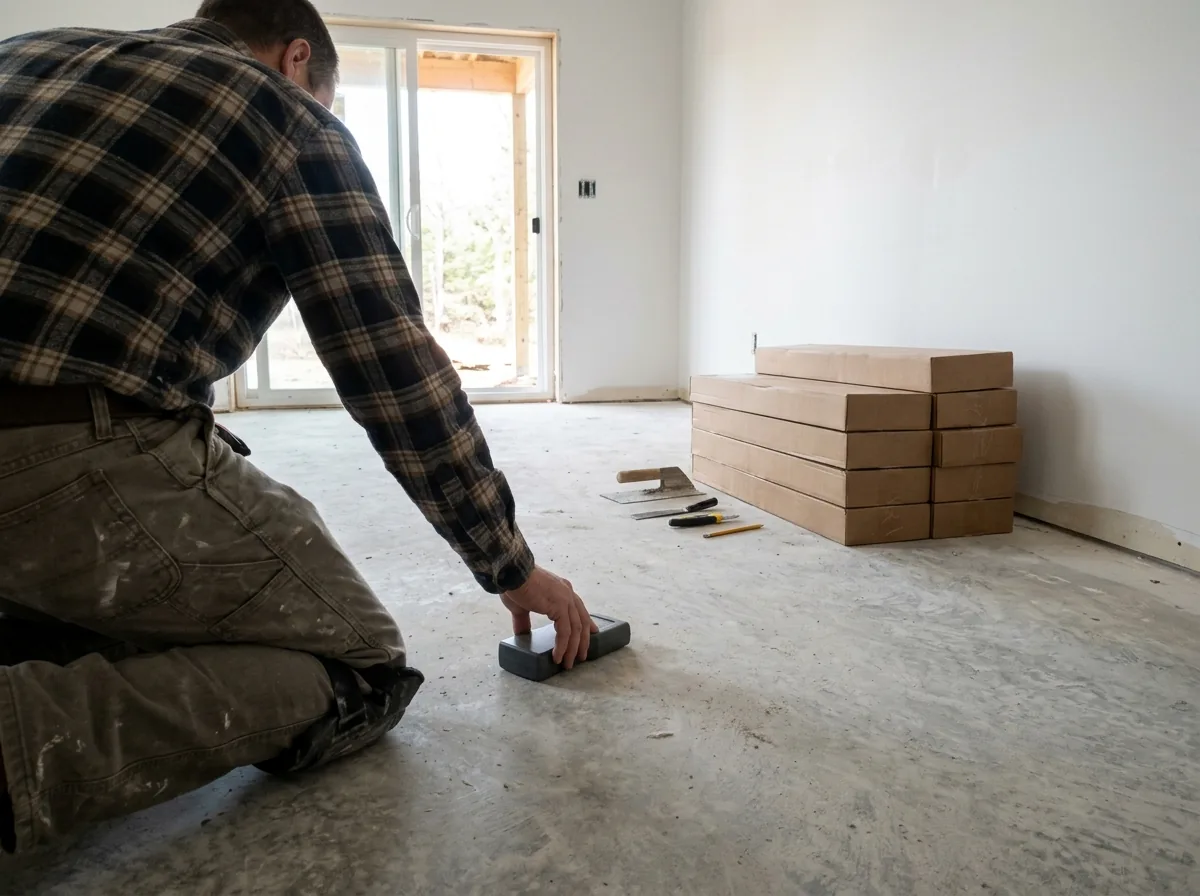
Why Pompano Beach homeowners call Pompano Wood Flooring
- One local flooring contractor calls back, not a bidding list
- Asking costs nothing and commits you to nothing
- Ask for the slab moisture readings in writing
- Florida doesn't license flooring: ask for the business tax receipt and insurance certificates
Pricing a White Oak Floor Job
Ask for the wood, the labor and the extras as separate lines so two quotes can be compared fairly.
Cut and grade
Plain-sawn, rift, quartered or mixed, and which appearance grade. Bob Vila notes "clear" grade has uniform color and no knots, while "select" shows knots, color variation and mineral streaks.Width and thickness
Bob Vila prices 3/4-inch boards above thinner ones and says thin boards can't be sanded as often.Solid or engineered
Solid over a wood subfloor, engineered for a slab; see solid hardwood flooring.Finish
Raw boards finished on site or factory-finished planks, and which product goes on top.
See herringbone wood floors for white oak in a pattern.