
Water-Damaged Wood Floor Types: Cupped, Crowned, Buckled and Beyond
Water damage in a wood floor shows up as a shape before anything else.
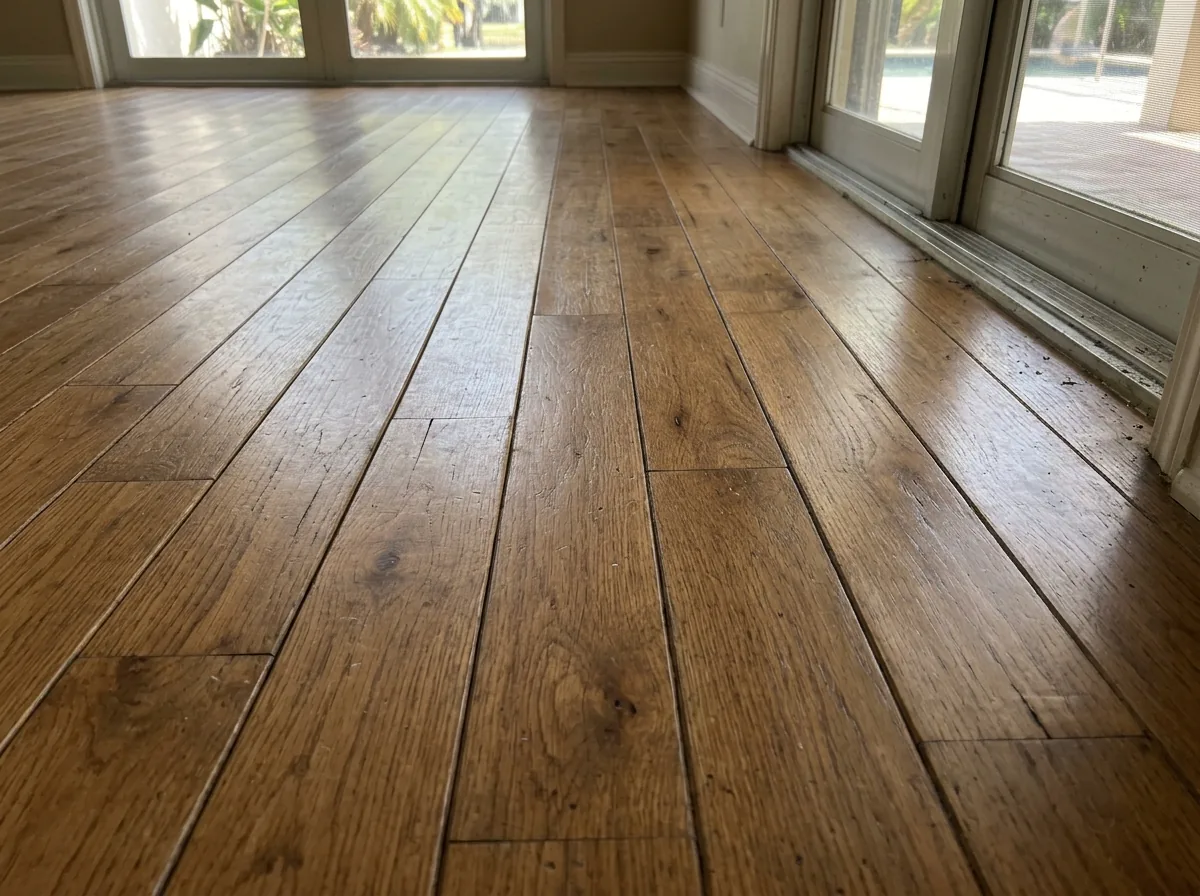
Cupping
A cupped board has edges higher than its middle. Wagner Meters explains that the underside has taken on more moisture than the face and swelled, curling the edges up, and that light from a window often shows it first as thin shadows along the seams. Once the moisture source is under control, most cupped floors flatten on their own as they dry.
- Cupping repair (HomeGuide): $2 to $6 a square foot to sand and refinish the area once it's dry.
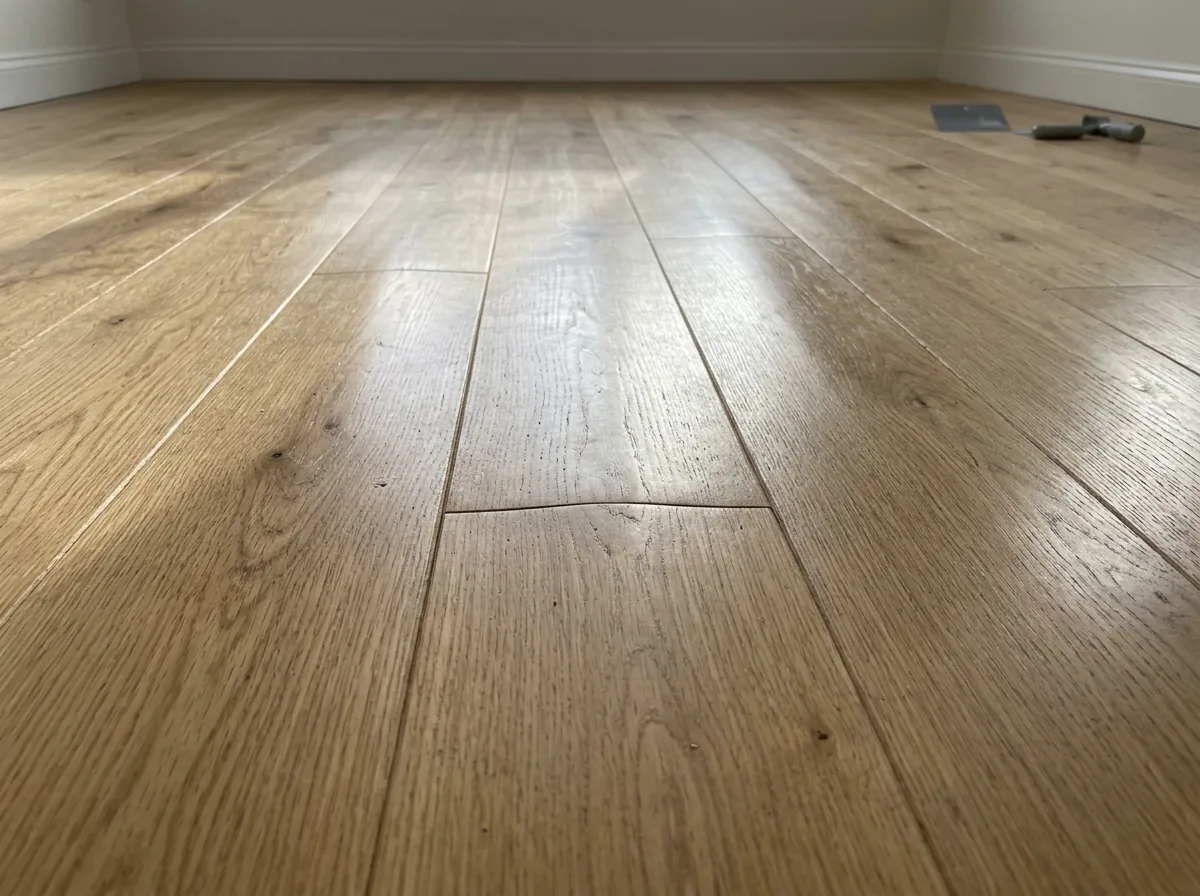
Crowning
Crowning is the reverse: the center of each board sits higher than the edges. Wagner Meters gives the usual cause as a floor sanded flat while it was still cupped. The edges lost wood they needed, so when the boards dried back, the centers ended up proud. A floor that crowned this way has to dry fully before anyone decides how to flatten it.
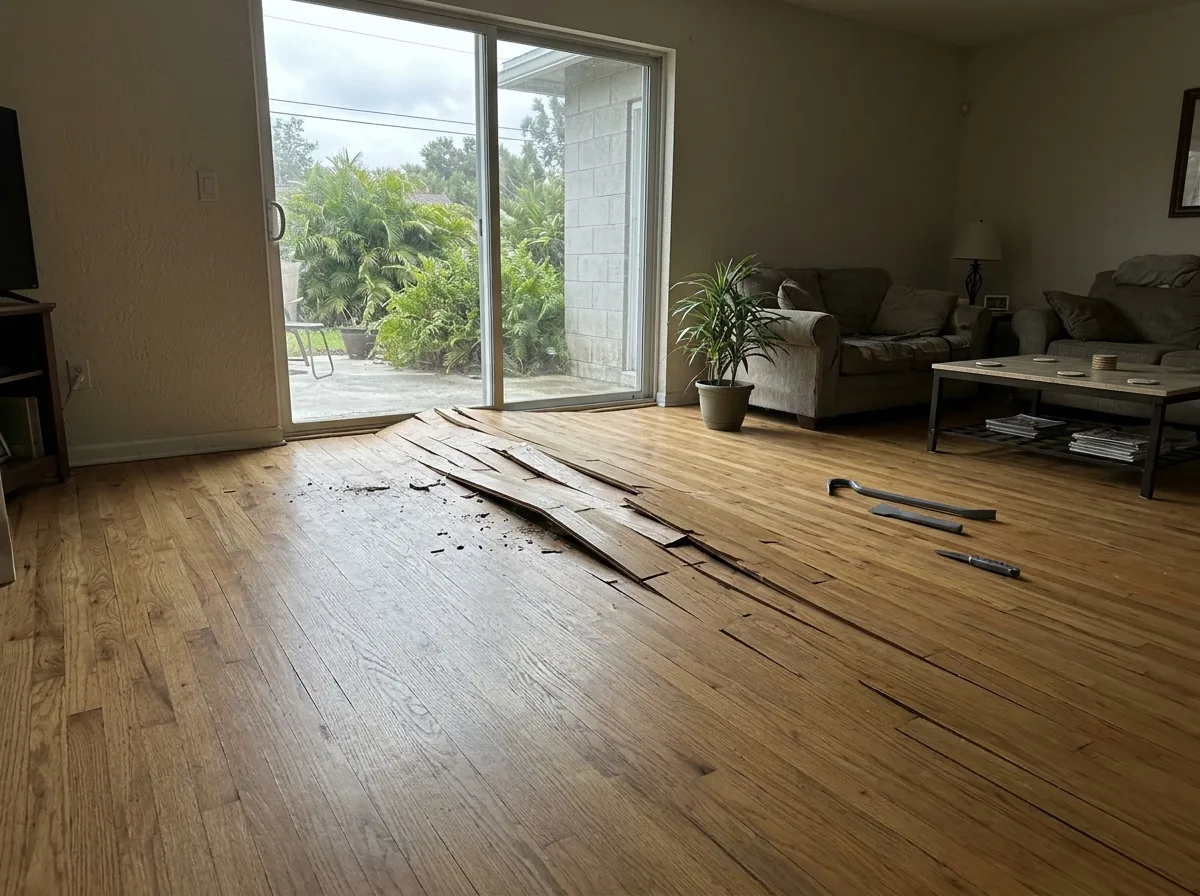
Buckling
Buckling is the floor lifting off what's under it. HomeGuide lists buckling and warping as common signs of water damage, and Wagner Meters says a cupped floor left wet can go on to buckle away from the subfloor, splinter and crack. Ask whether a buckled section can be relaid once dry or has to be replaced.
- Water damage repair (HomeGuide): $10 to $80 a square foot, depending on whether boards, subfloor or joists are involved.
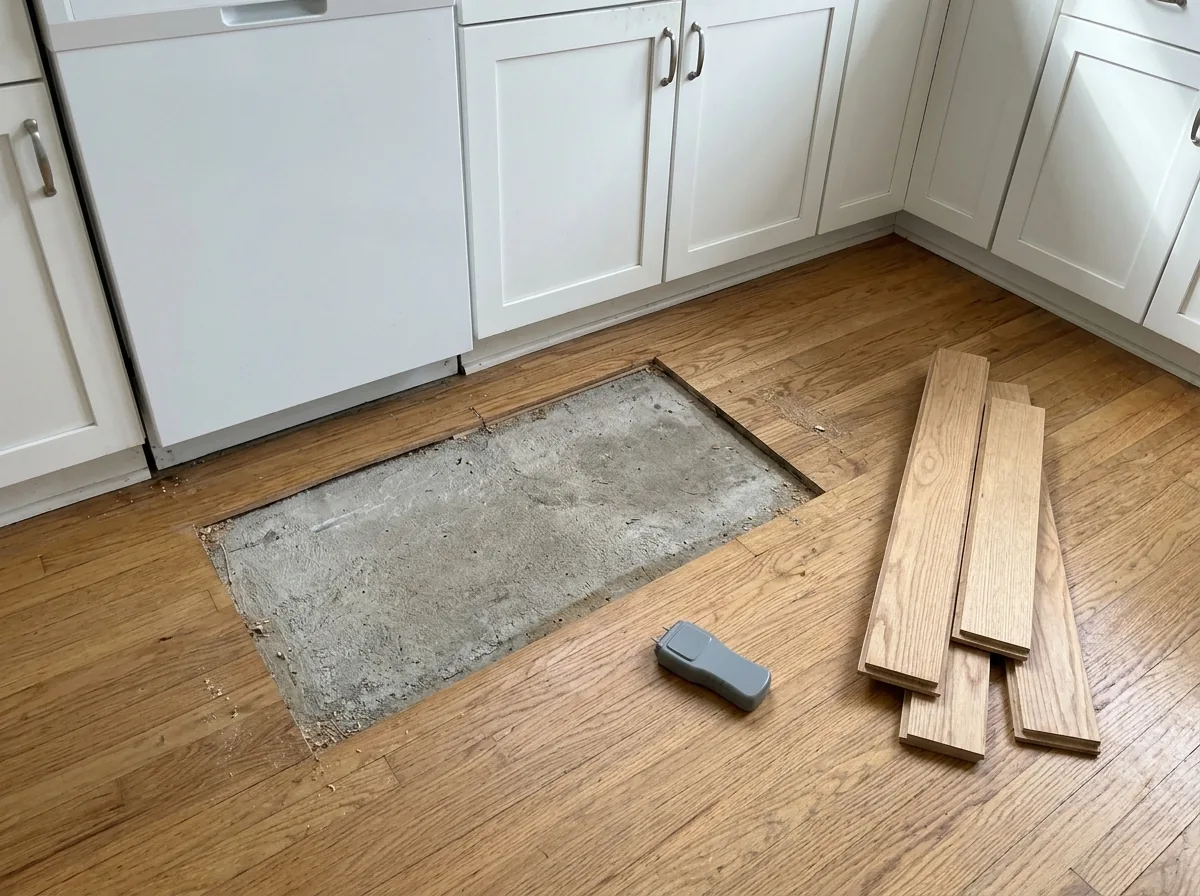
Spot board replacement after a leak
A slow drip under a sink or dishwasher can ruin a few boards while the rest of the room stays sound. Wagner Meters notes that leak cupping usually stays around sinks, dishwashers and similar spots. Once the floor around it reads dry, the damaged boards can be cut out and replaced. National guides' board-replacement figures are on the hardwood floor repair page.
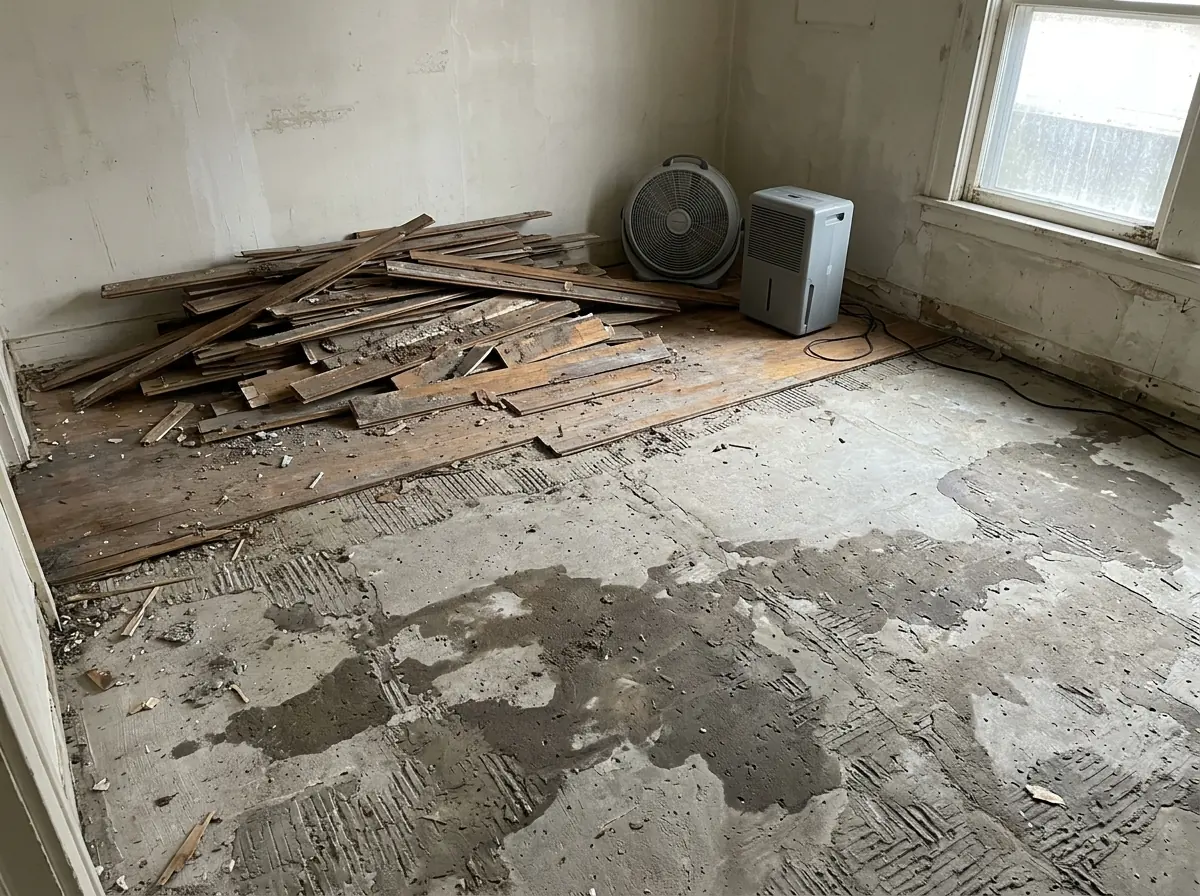
Full tear-out when the slab stays wet
When the concrete itself stays wet, the floor can't be fixed board by board. The American Hardwood Information Center is blunt: if tests show too much moisture in the slab, don't install hardwood. Provenza's instructions add that a slab that tests dry may get wet again in a different season.
- Complete floor replacement (HomeGuide): $6 to $15 a square foot.
- Mold removal, if found (HomeGuide): $15 to $30 a square foot.
- Before new wood goes down: a fresh slab moisture test, and the old floor taken out properly (hardwood floor removal).
Why Pompano Beach homeowners call Pompano Wood Flooring
- One local flooring contractor calls back, not a bidding list
- Asking costs nothing and commits you to nothing
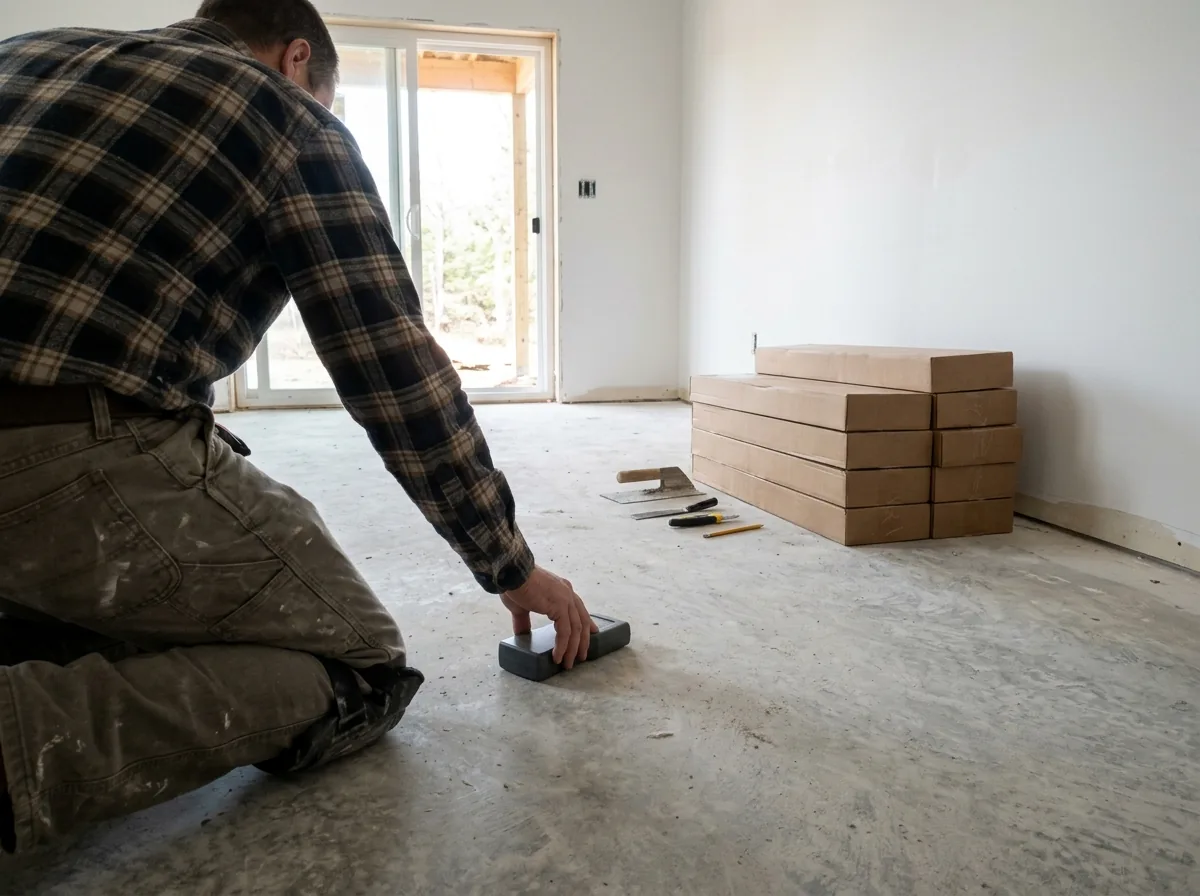
- Ask for the slab moisture readings in writing
- Florida doesn't license flooring: ask for the business tax receipt and insurance certificates
Drying a Wet Wood Floor Before Any Repair
- 1
Stop the water
Fix the leak or the source first. Wagner Meters warns that if the source isn't fixed, the cupping comes back.
- 2
Dry the room
Fans and a dehumidifier speed drying, Wagner Meters says. HomeGuide prices portable dehumidifiers at $170 to $300 and a whole-house unit at $1,100 to $3,500 installed.
- 3
Track the readings
Moisture readings in the same spots every few days, in the damaged area and in an unaffected one. Ask the specialist to write them down with the date.
- 4
Then repair
When the two sets of readings match and hold steady, anything still cupped can be sanded, and boards that didn't recover can be replaced.
Where Water Damage Shows Up in Pompano Beach Homes
An NWFA magazine article on cupping says most cases it sees sit by an outside door or at the kitchen sink. Wagner Meters adds dishwashers, bathtubs and other leak-prone spots, and gives Florida's rainy season as a time cupping appears from humidity alone. In National Weather Service records for southeast Florida, the humid summer season runs from about May 21 to October 17.
On a slab-built house the concrete is the other suspect, since an on-grade slab always carries moisture, as an NWFA magazine article puts it. Widespread cupping with no leak in sight is the case for testing the slab before blaming the boards.