
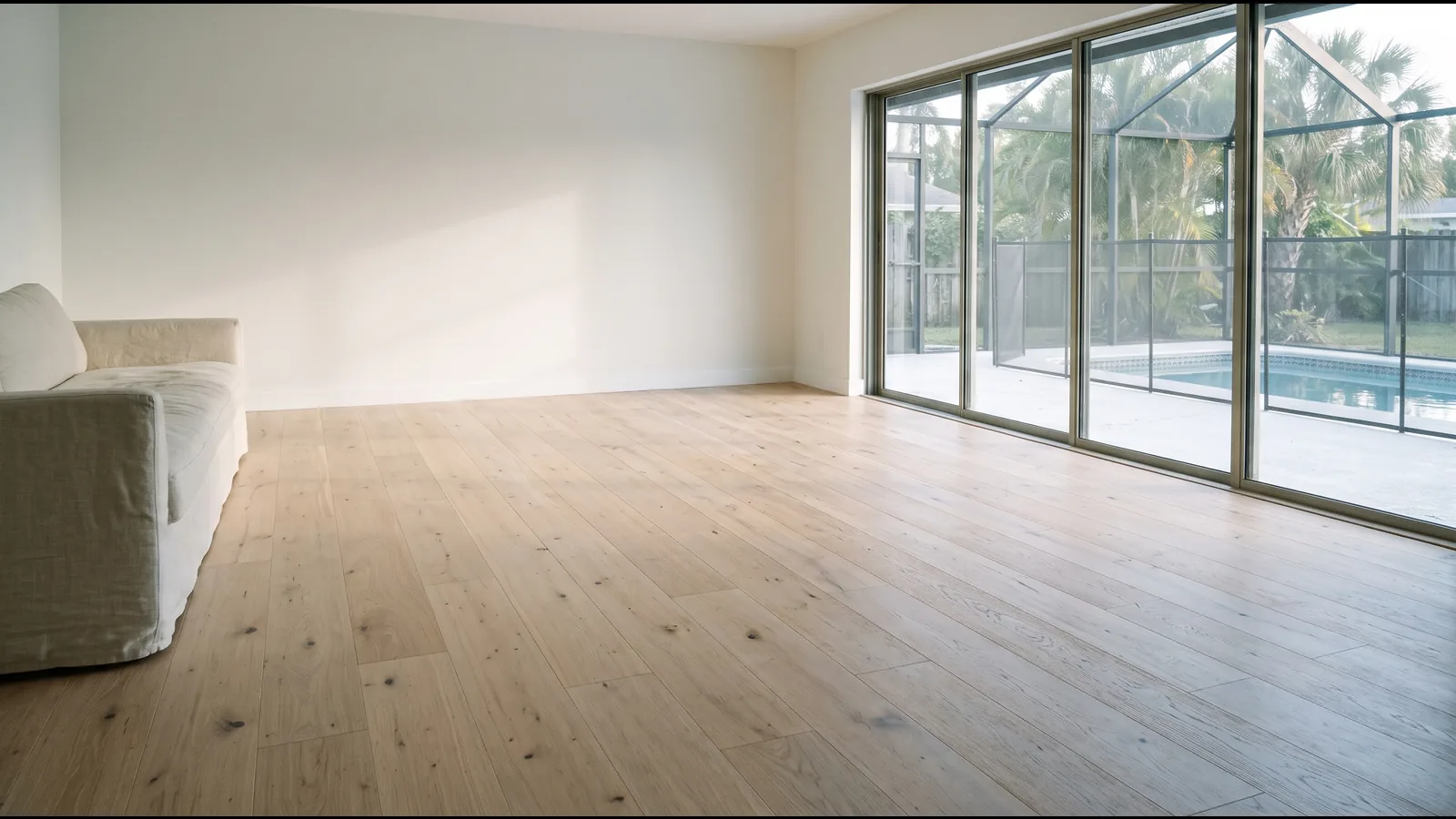
Hardwood Stair Tread and Riser Options
Which option fits depends on what's under the carpet or tile now, whether the stair is boxed in or open on one side, and how much height you can add.
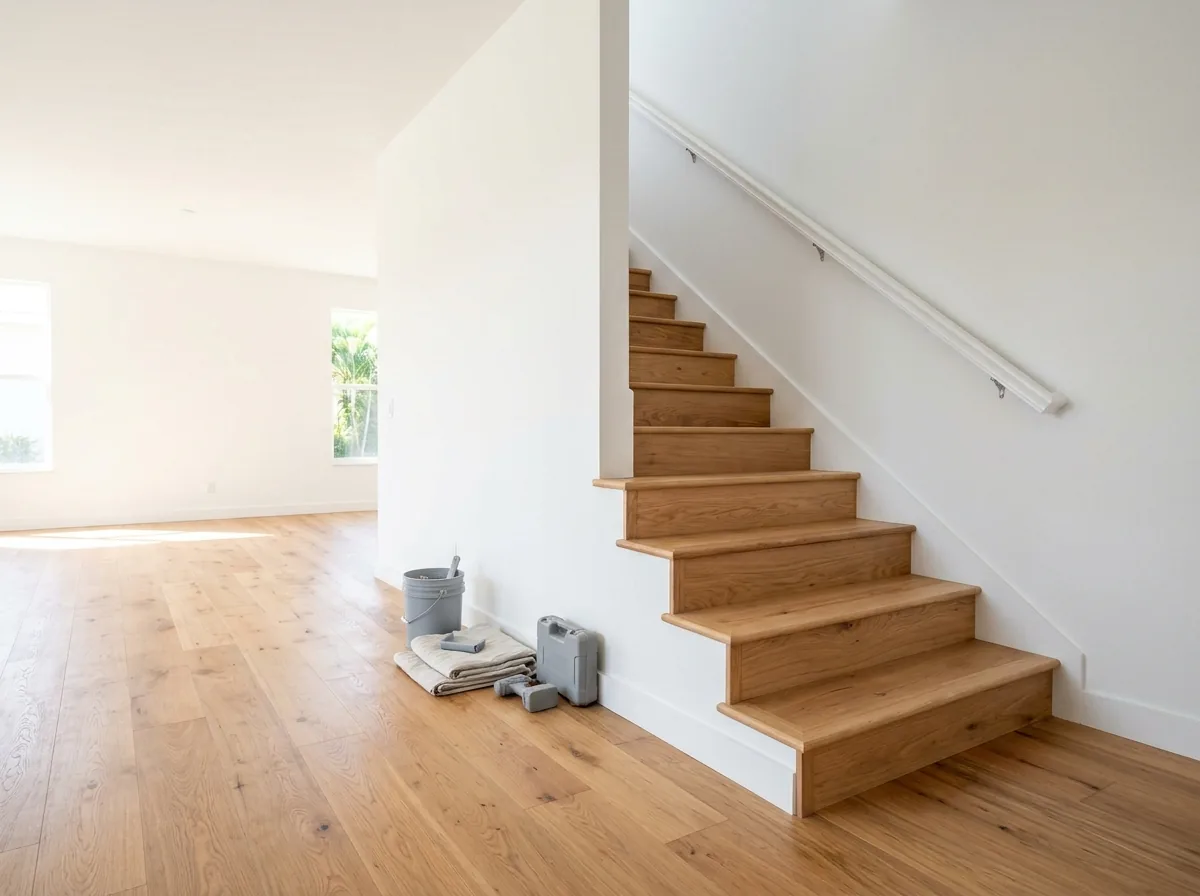
Solid hardwood treads and risers
The old covering comes off, and new treads and risers are cut to fit each step. HomeGuide describes the sequence: risers secured first, adhesive on each tread, then the tread leveled and nailed. HomeGuide also says engineered wood suits stairs because it's stable, and its per-step table prices both.
- Oak (HomeGuide): $120 to $180 a step solid; $100 to $150 engineered.
- Hickory (HomeGuide): $130 to $220 solid; $110 to $160 engineered.
- Maple (HomeGuide): $140 to $240 solid; $120 to $170 engineered.
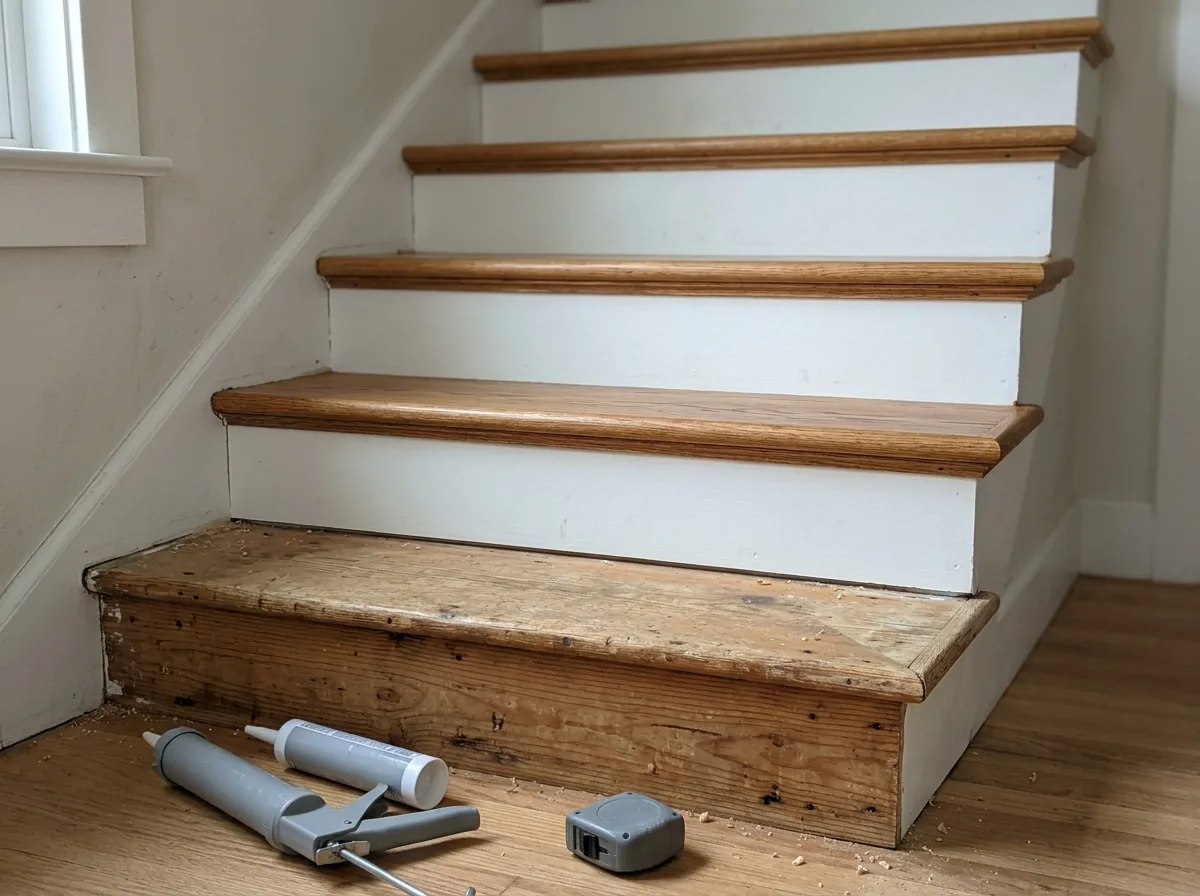
Retrofit treads over existing stairs
A retrofit tread is a finished cap that goes over the old tread instead of replacing it, so the stair framing stays put. One retrofit maker's instructions set out the steps: strip the old covering, trim the old tread's overhang to 1/16 inch behind the riser line, make sure every tread and riser is tight to the stringer, and glue the cap with urethane adhesive, never a water-based one. Squeaky treads get extra wood screws first, which the same instructions say also stops squeaks coming back.
- Open-sided stairs: a return nosing covers the exposed end of each cap.
- Risers: either new riser boards or the old ones refinished or veneered before the caps go on.
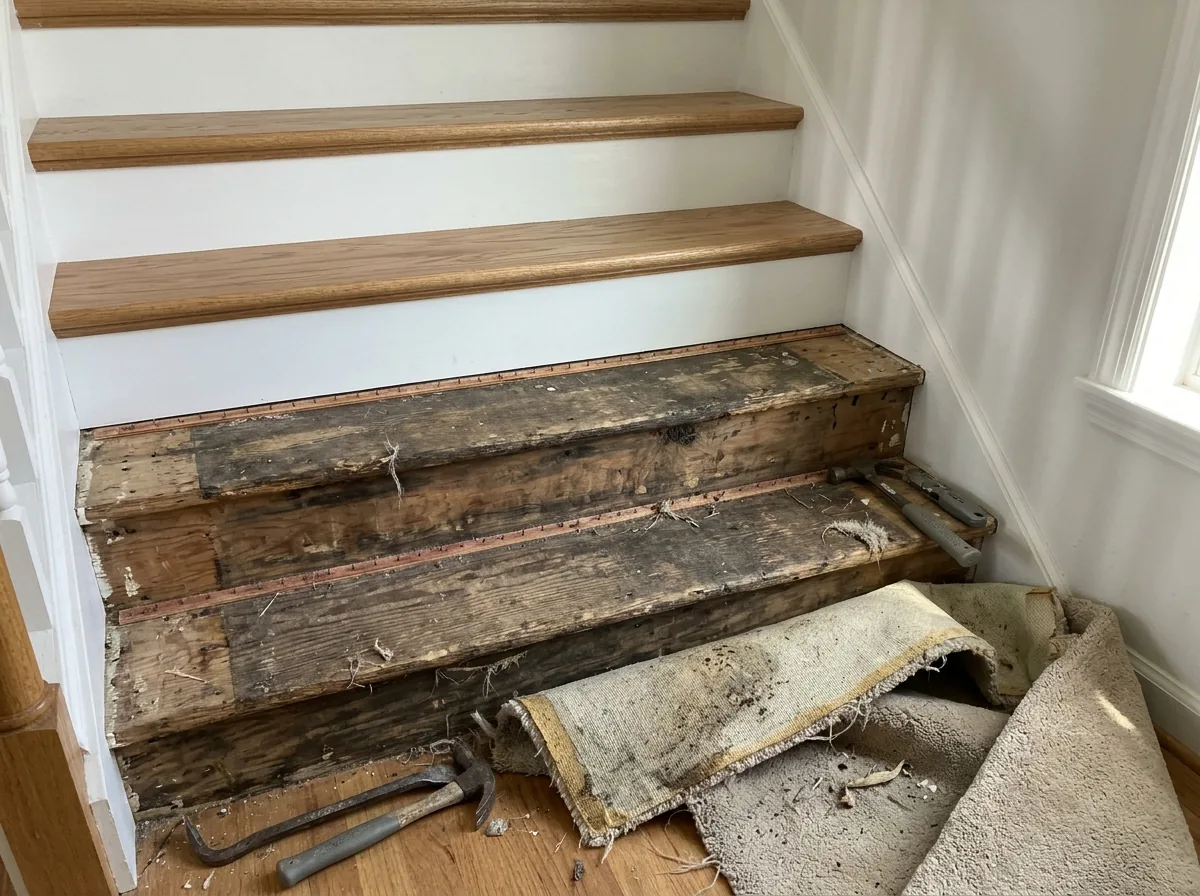
Carpet-to-wood stair conversion
Taking carpet off is where most wood stair jobs start. HomeGuide puts carpet removal at $100 to $400 for a staircase, more where there's glue or several layers. Staples and tack strips all have to come out before new treads or caps go on. Wood stairs are slicker than carpet, and HomeGuide suggests a runner, anti-slip treads or an anti-slip finish if that's a worry.
- Carpet removal (HomeGuide): $100 to $400.
- Stair repairs found underneath (HomeGuide): $200 to $600, typically squeaks or water damage.
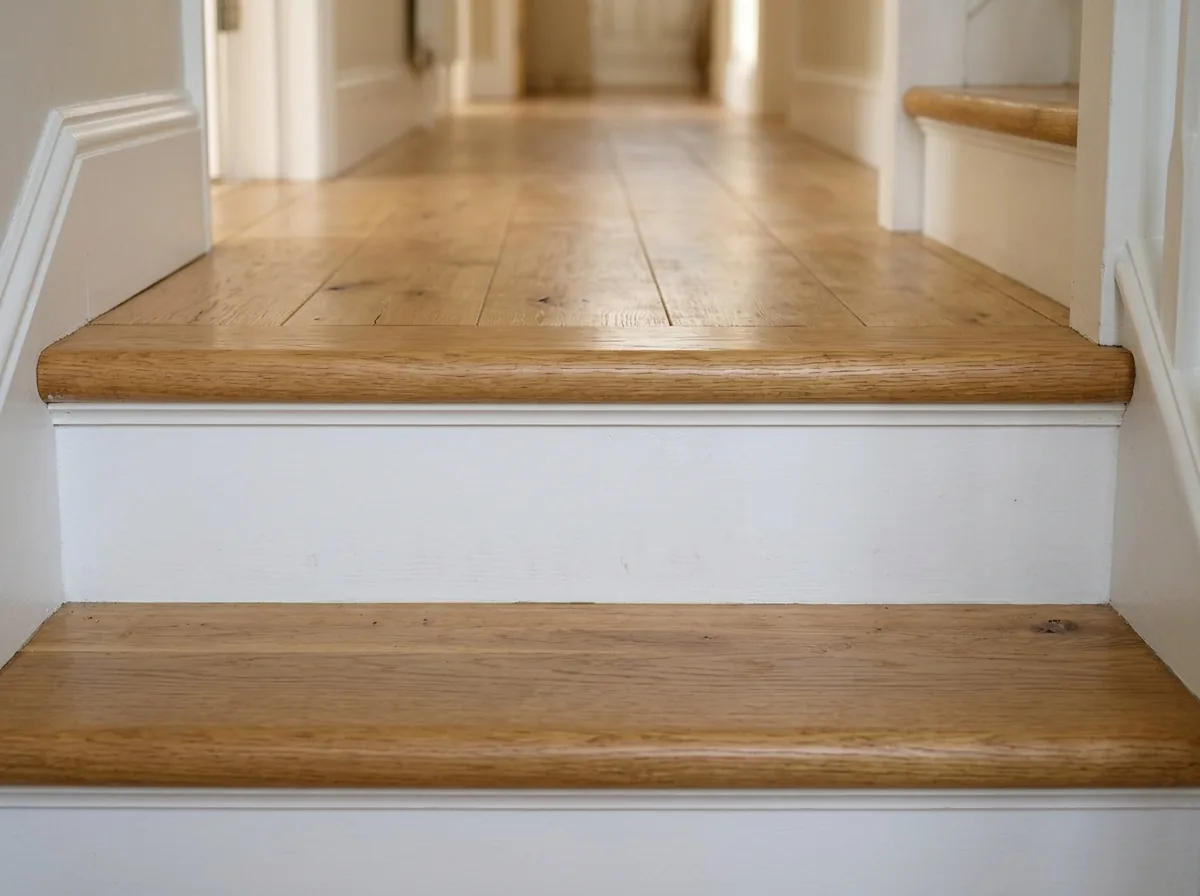
Stair nosing and landings
The nosing is the front edge of the tread that overhangs the riser below. Florida's residential code sets its shape and reach. On an engineered stair install the nosing can be a separate piece. Kentwood's stair instructions glue it down with a hairline 1/16-inch gap to the riser to stop it knocking, and use full-spread glue on every tread. HomeGuide notes that more steps and bigger landings both raise the cost.
- Projection: 3/4 inch to 1 1/4 inches, varying no more than 3/8 inch along the stairway.
- Edge: a radius of 9/16 inch or less, or a bevel of 1/2 inch or less.
- No nosing needed: where the tread is at least 11 inches deep.
Why Pompano Beach homeowners call Pompano Wood Flooring
- One local flooring contractor calls back, not a bidding list
- Asking costs nothing and commits you to nothing
- Ask for the slab moisture readings in writing
- Florida doesn't license flooring: ask for the business tax receipt and insurance certificates
Hardwood Stair Tread Costs, Line by Line
HomeGuide breaks its 12-to-16-step average into parts, which makes a stair quote easier to read:
Materials
$600 to $2,400.Labor
$600 to $1,600, at $50 to $80 an hour.Old flooring removal
$100 to $400.Repairs as needed
$200 to $600.Finishing
$300 to $1,300.
Curved and spiral stairs cost more than straight ones, HomeGuide says. Prefinished treads cost more to buy but skip on-site finishing; unfinished ones need sanding and finishing on site, so ask for that as its own line. Railings and balusters are separate: $20 to $250 a linear foot for rails and $5 to $20 or more per baluster. HomeAdvisor notes most homes have 10 to 20 stairs.
Florida Stair Code Numbers to Check Before New Treads Go On
The 2023 Florida Building Code, Residential (8th edition), section R311.7.5, measures stairs without carpet, rugs or runners, so going from carpet to wood changes the numbers that count. Whether a tread replacement has to bring an older stair up to these numbers is a question for the city's building department.
Riser height
7 3/4 inches at most.Tread depth
10 inches at least.Uniformity
within one flight, the tallest riser can't beat the shortest by more than 3/8 inch, and the same limit applies to tread depth.
Every tread cap or new tread adds thickness. On the middle steps that cancels out, but the bottom riser grows and the top one shrinks. Ask the carpenter to measure the flight and show how the first and last risers will stay inside that limit. Kentwood suggests a plywood underlay on some treads where the difference runs over.
Keeping the treads you have and only refinishing them is a different job: see stair refinishing. In a home built before 1978, painted risers fall under the EPA's lead-safe sanding rule.