
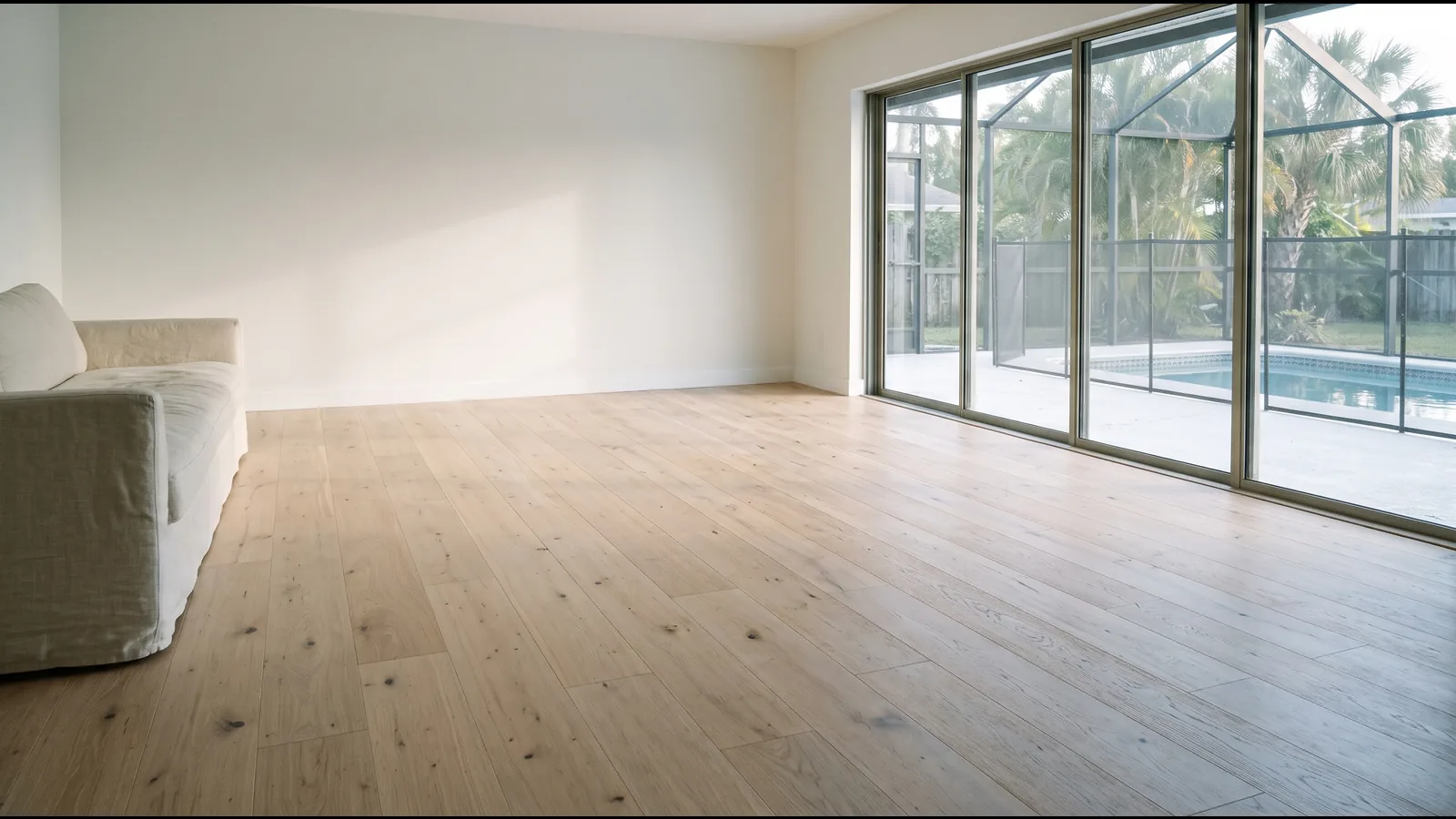
Hardwood Floor Refinishing Methods and Finish Choices
Refinishing means sanding through the old finish into clean wood and putting new coats on top. The method decides how much wood comes off and how much dust stays in the house. The finish decides how soon you get the room back.
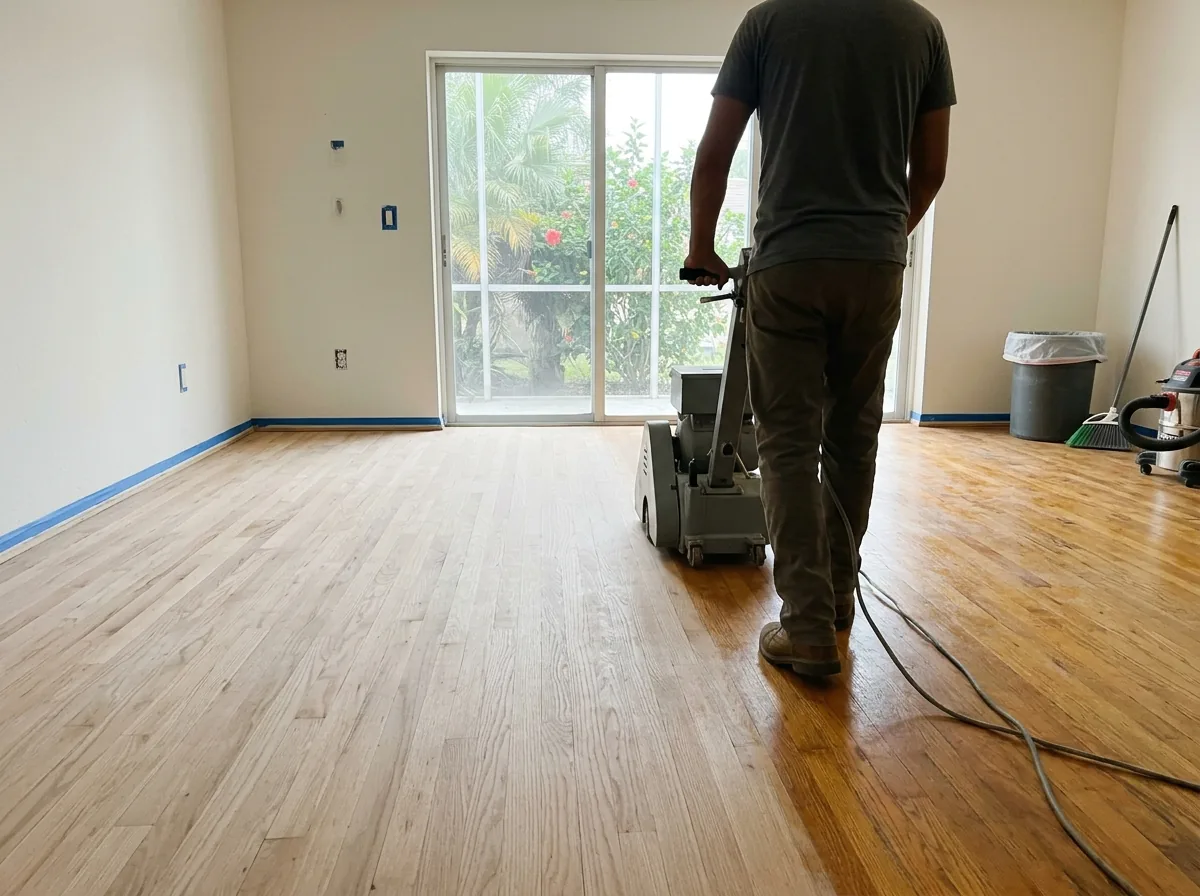
Full sand and refinish
A big belt or drum sander cuts the floor flat and bare, an edger does the borders, and finer grits smooth it out before stain and topcoats go on. The NWFA's Brett Miller, writing in the association's magazine, says a traditional sand job removes 1/32 to 1/16 inch of wood, which is why the number of sandings is limited. Most of what you pay for is the crew's time.
- Labor share (HomeAdvisor, Fixr): up to about 80% of the price.
- Typical project (HomeAdvisor): $1,107 to $2,681.
- Extra coats of finish (HomeGuide): $0.50 to $1.75 a square foot each.
- Lifetime sandings, solid floors: six to eight (NWFA magazine); HomeGuide says 4 to 10.
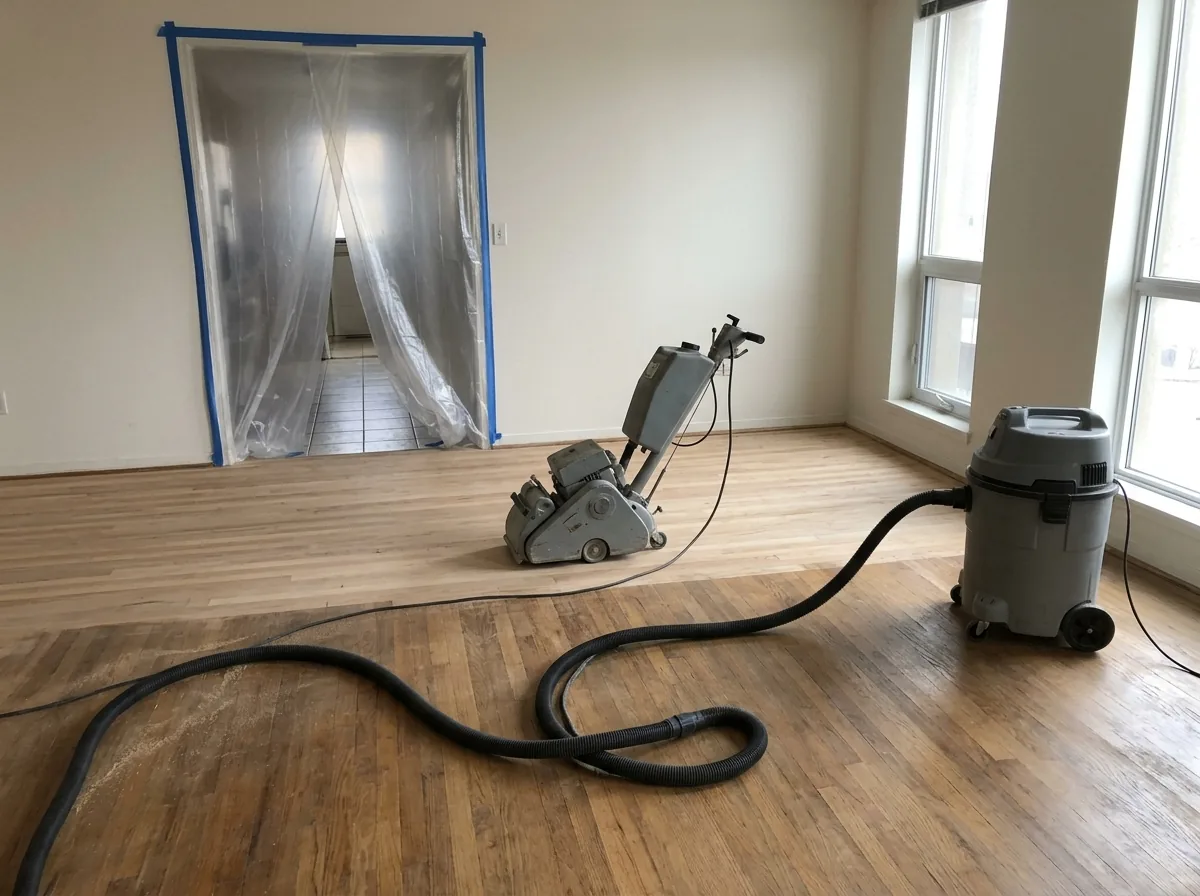
Dust-contained sanding
Sold as "dustless," this is the same sanding with the machines piped to vacuum collection, so most of the dust goes into a bag rather than the air. That matters most in an occupied home or a condo with shared halls. The guides price it two ways, as an add-on or as the whole job:
- As an add-on: about $2 a square foot (HomeAdvisor); $2 to $4 (HomeGuide).
- As the full price: $5 to $8 a square foot (Bob Vila); $6 to $8 (Fixr).
Ask what's captured at the edger and the buffer as well as the big machine. The NWFA article notes that good dust containment also lets the crew see what they're doing and avoid over-sanding.
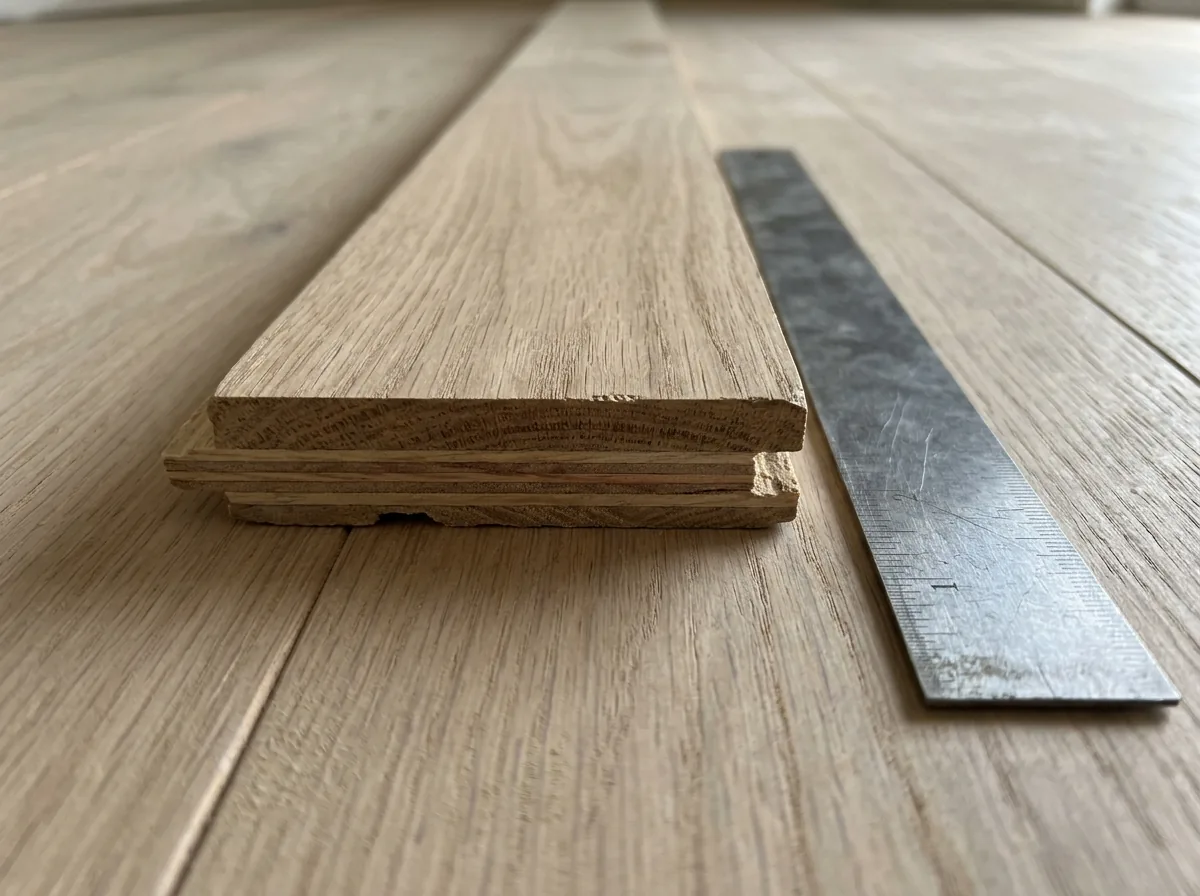
Refinishing engineered hardwood
Only the top layer of an engineered board is real sandable wood, and the guides disagree on how many times it can be sanded. HomeGuide's minimum is 2 mm, good for 1 to 3 refinishes; Fixr says five to six. The NWFA magazine piece draws its line at 3/32 inch and tells floor pros to measure the wear layer in several spots. A crew that won't measure before quoting a full sand is guessing.
- Price (HomeGuide): $2 to $6 a square foot; HomeAdvisor says $3 to $5.
- Can't be sanded (HomeGuide): very thin wear layers and acrylic finishes.
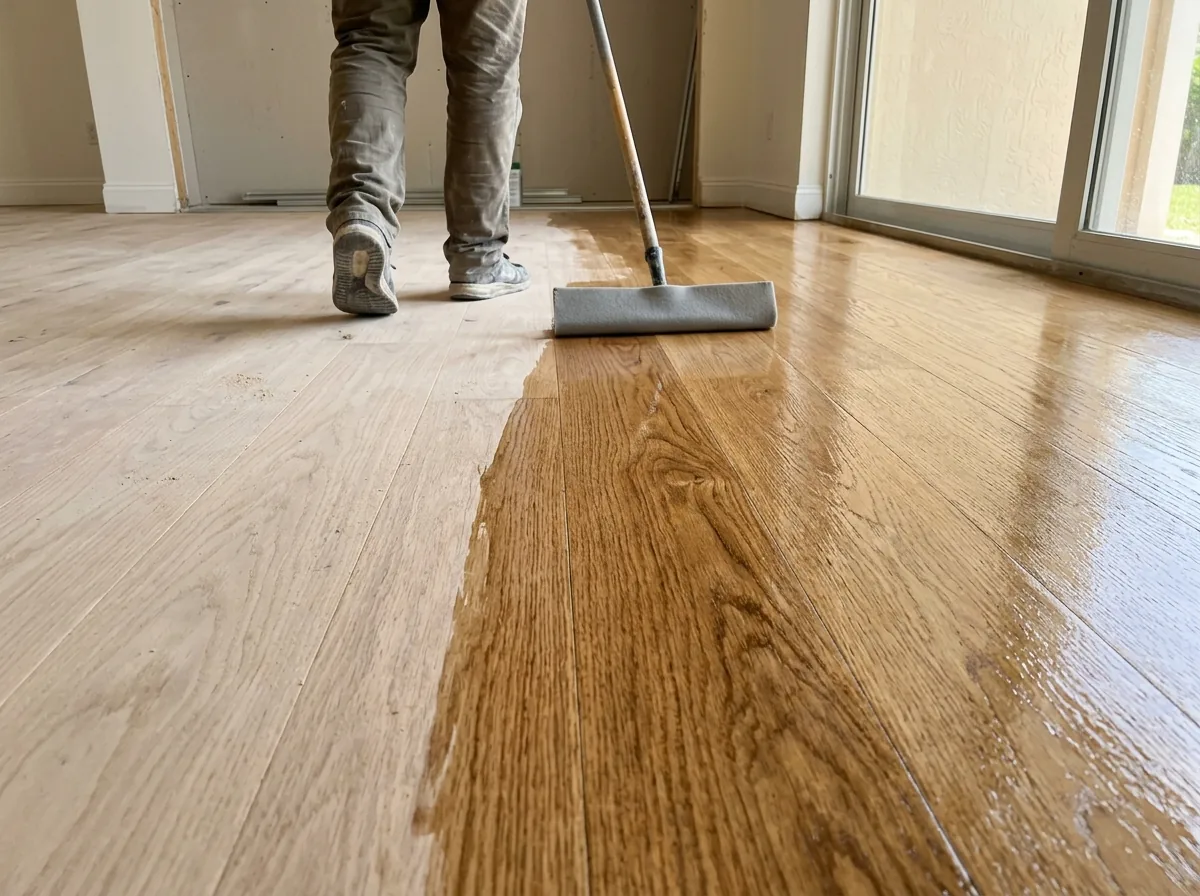
Finish systems: waterborne two-part, oil-based and hardwax oil
The topcoat sets the look, the smell and the cure. These are each product's or guide's own numbers, so ask for the product name and plan furniture around its numbers.
- Waterborne two-part (Bona Traffic HD data sheet): dry in 2 to 3 hours; walk on after 24 hours; 80% cured after 1 day and fully after 3; no area rugs until then.
- Water-based polyurethane (Bob Vila): items back after a couple of days; full cure usually about 21 days.
- Oil-based polyurethane (Bob Vila): 4 to 6 hours between coats; usable after about 4 days; full cure about 30 days.
- Hardwax oil (Rubio Monocoat Oil Plus 2C): walk on in 24 to 48 hours; full move-in at 48 hours; cured and kept dry for 7 days. Without the accelerator, cure is about 21 days.
Why Pompano Beach homeowners call Pompano Wood Flooring
- One local flooring contractor calls back, not a bidding list
- Asking costs nothing and commits you to nothing
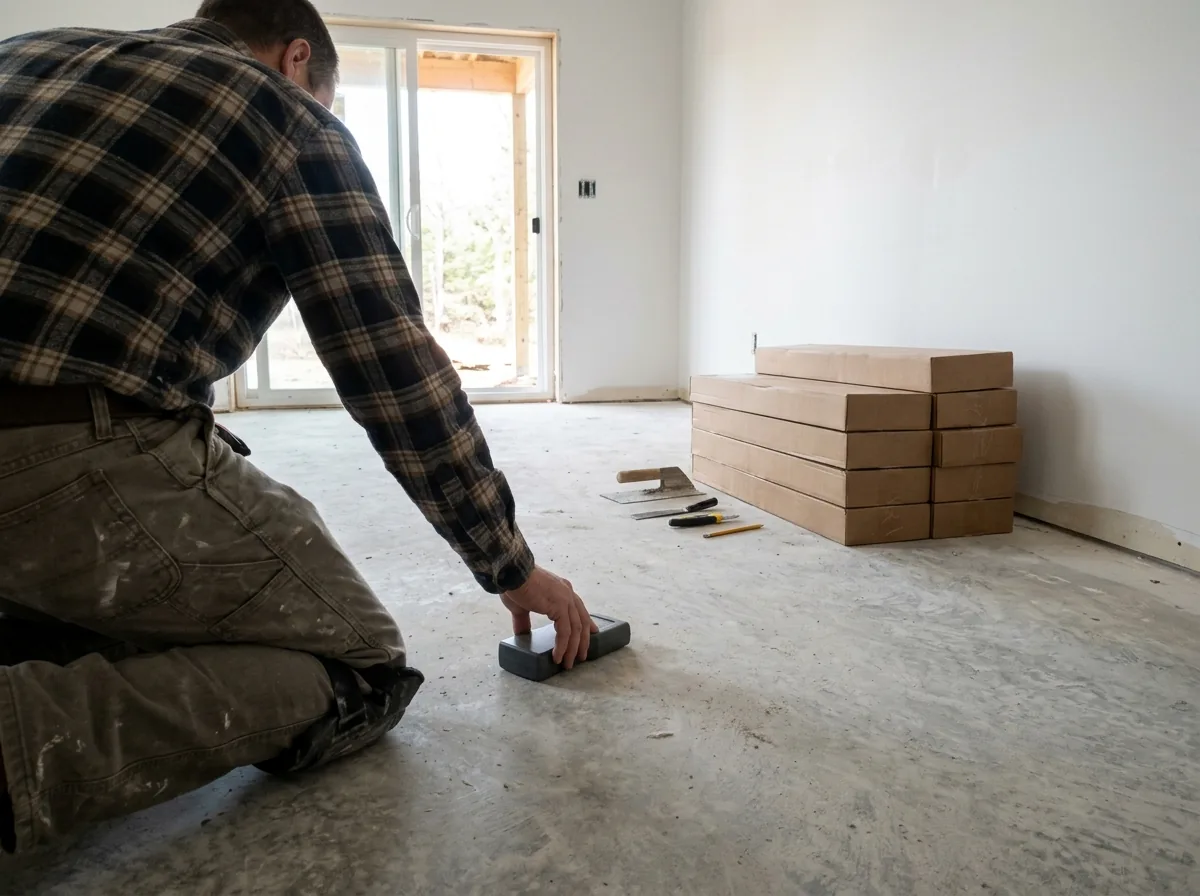
- Ask for the slab moisture readings in writing
- Florida doesn't license flooring: ask for the business tax receipt and insurance certificates
How a Refinishing Job Runs, Start to Finish
- 1
Walk-through and wear-layer check
Ask to have the wood, the old finish and any boards that need replacing looked at first, and ask for the square footage, stain, number of coats and furniture moving to be priced separately; HomeGuide's own question list includes whether moving furniture costs extra.
- 2
Rough sanding and edging
The first cuts strip the old finish and flatten the floor. If boards are being replaced, ask for that to happen before sanding so the new wood is sanded with the rest.
- 3
Fine sanding, stain and coats
Stain, if any, then the finish coats with drying time between; ask how many coats the quote includes. HomeGuide suggests asking whether humidity readings are taken between coats.
- 4
Cure and move back
The finish table above sets when you can walk, move furniture and lay rugs. HomeGuide's 2 to 6 days covers sanding, coats and drying; full cure runs longer on most of those finishes.
Lead-Safe Sanding in Older Pompano Beach Homes
Pompano Beach's housing is old by Florida standards: the Census Bureau's 2024 survey dates 66.9% of the city's units to before 1980. That brings in the federal lead renovation rule.
What counts as paint
the rule defines a painted surface as one covered "with paint or other surface coatings", and lead-based paint as paint or other surface coatings at 1.0 mg/cm2 or 0.5% lead by weight or more.What counts as renovation
sanding that may generate paint dust is named in the definition.Who must be certified
anyone paid to disturb paint in housing or child-occupied facilities built before 1978, sole proprietors included, needs EPA firm certification.The way out
components declared lead-free by a certified inspector or risk assessor, or by a certified renovator using an EPA-recognized test kit or lab samples. Work disturbing 6 square feet or less of paint per room inside is exempt, which a whole floor won't be.
In a pre-1978 home, ask for the firm's EPA certification or a lead-free test result before the first pass. Painted risers on a staircase and old painted trim fall under the same rule.
Refinish, Recoat or Replace?
Recoat
If the finish is dull and scratched but hasn't worn through to wood, a screen and recoat is cheaper and quicker.Refinish
Wear through to bare wood, gray patches, deep scratches or a color change call for full sanding.Replace
HomeGuide says replacement is needed for extensive water damage, warping or wood too thin to sand safely. Cupped boards have to dry before anyone sands them (water-damaged floor repair).