
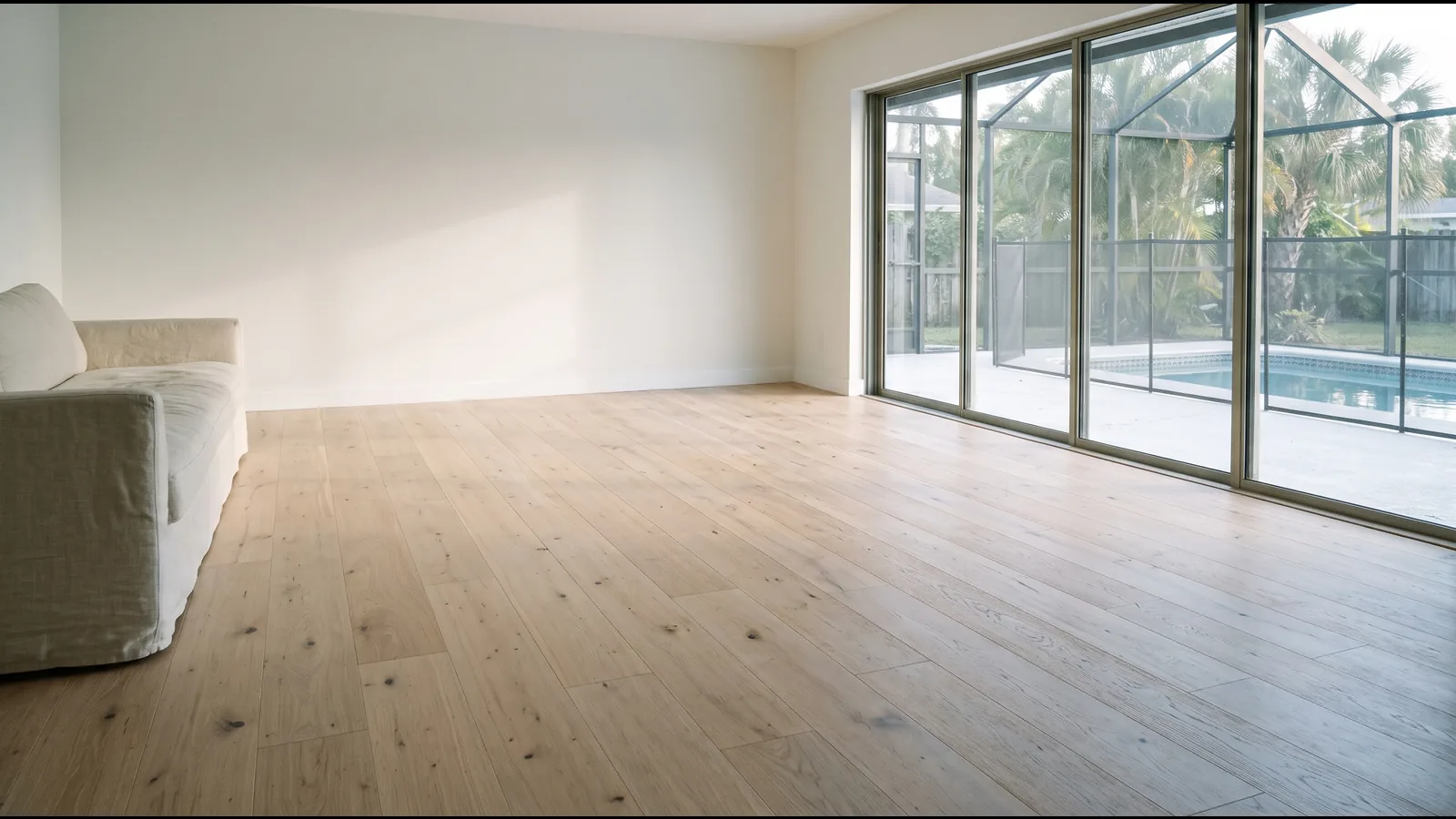
Concrete Moisture Testing Methods Before Wood Floors
The test measures how much water the slab is still giving off. The floor's maker decides which test counts and what number passes, so pick the flooring first, then test against its instructions.
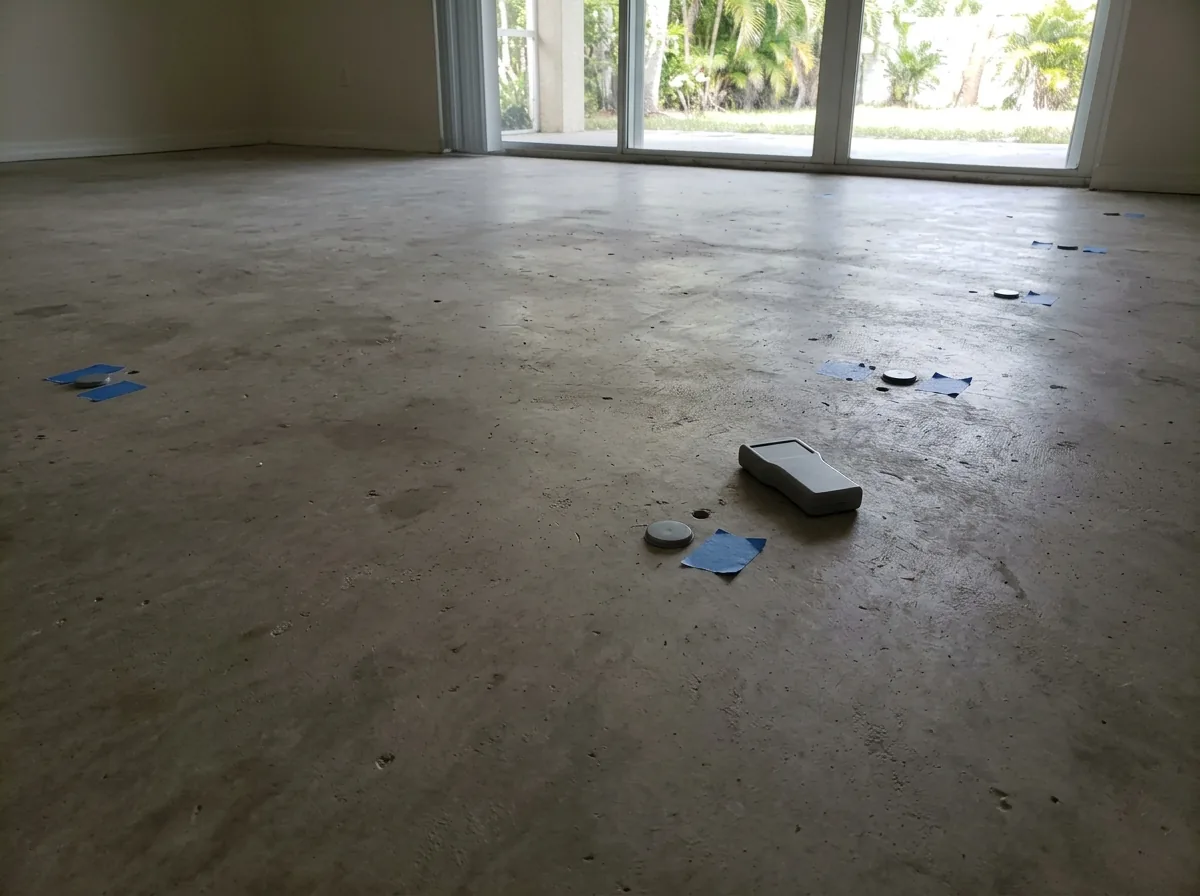
ASTM F2170 In-Situ RH Probes
Probes go into holes drilled to 40% of the slab's depth, which shows what the concrete will settle to once a floor seals the top. Wagner reads the standard as recommending 75% RH or less in general, with each maker's limit taking priority. Readings count after 24 hours since a 2018 revision; it used to be 72.
- Provenza limit: 75% RH
- Pergo locking engineered: below 80% RH
- How many: 3 in the first 1,000 sq ft, plus 1 per additional 1,000 (Wagner)
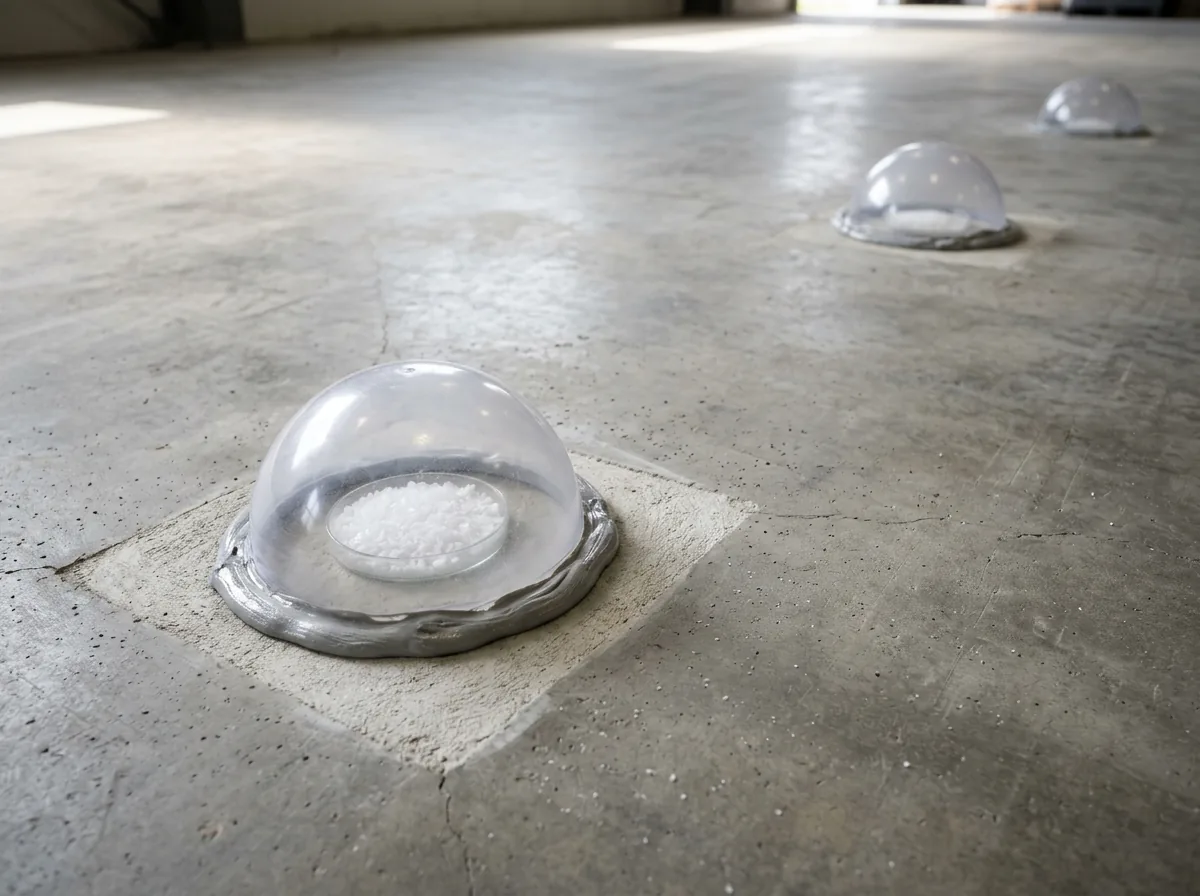
ASTM F1869 Calcium Chloride Test
A dish of calcium chloride sits under a sealed dome and is weighed afterward to give pounds of vapor per 1,000 square feet in 24 hours. Wagner says it measures only what leaves the surface, sits 60 to 72 hours, and is no longer permitted on lightweight concrete. Some makers still accept it.
- Provenza limit: 3 lbs per 1,000 sq ft
- Pergo limit: 5 lbs per 1,000 sq ft per 24 hours
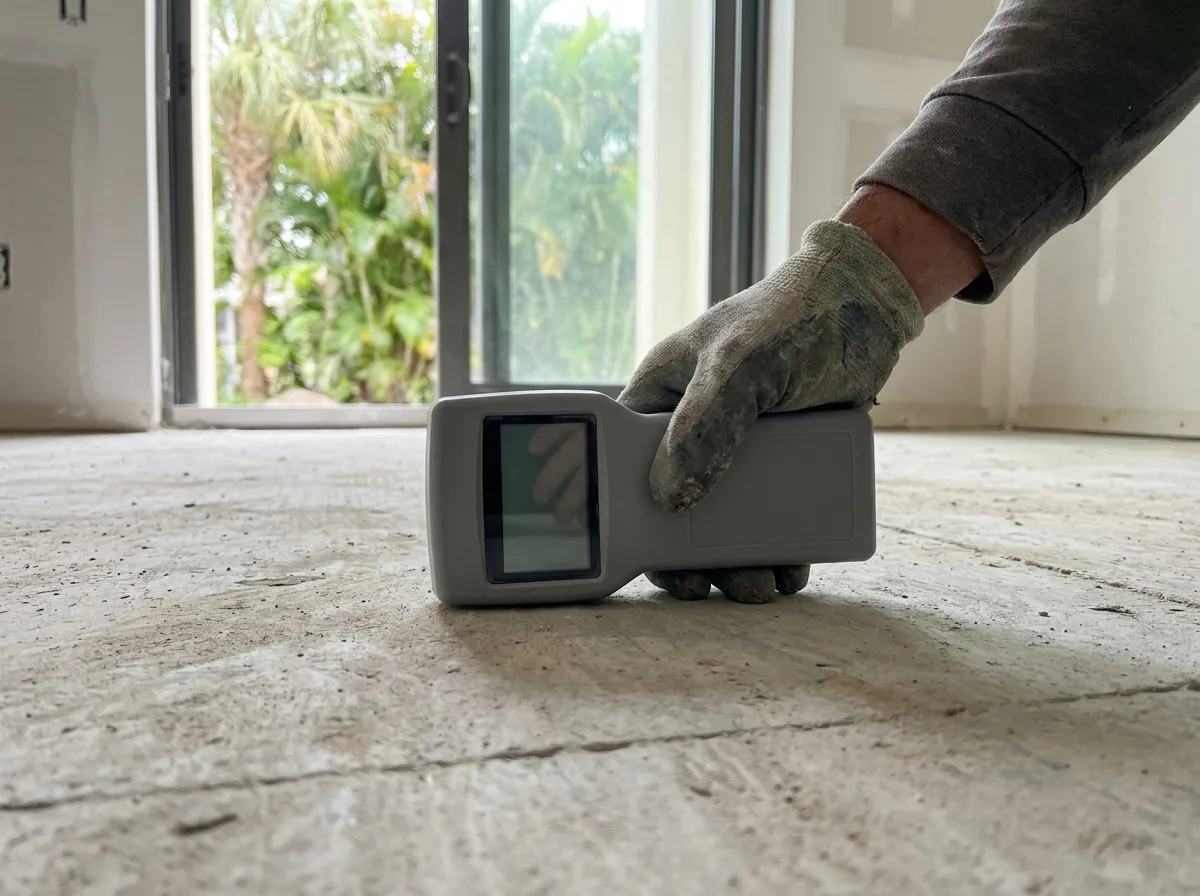
Surface Meter Screening
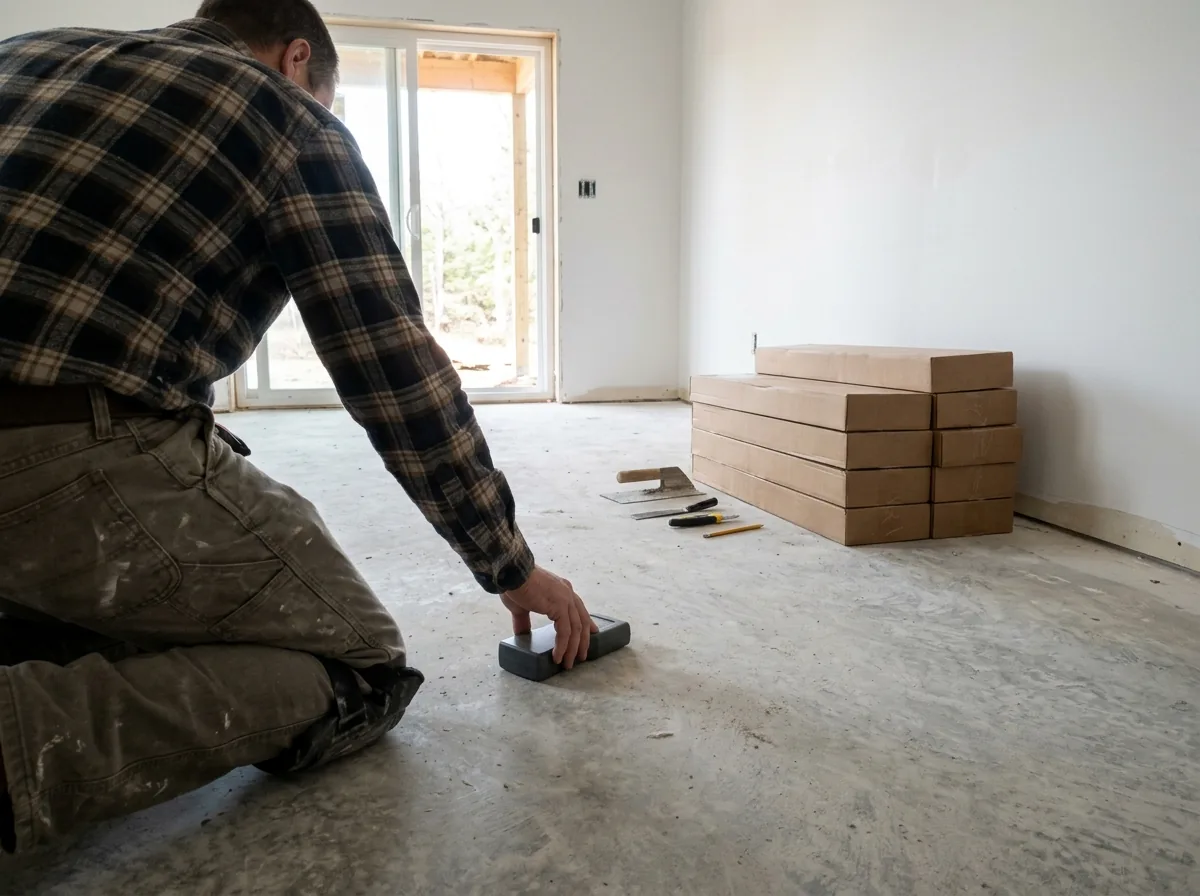
A meter laid on the slab gives a reading in seconds, which makes it good for finding wet zones and choosing where the probes go. Wagner says it reads about the top half inch and falls under ASTM F2659, a preliminary guide, not F2170. Provenza accepts a Tramex reading up to 4.5 on the upper scale. Other makers may not.
Moisture Barrier Options When a Slab Fails
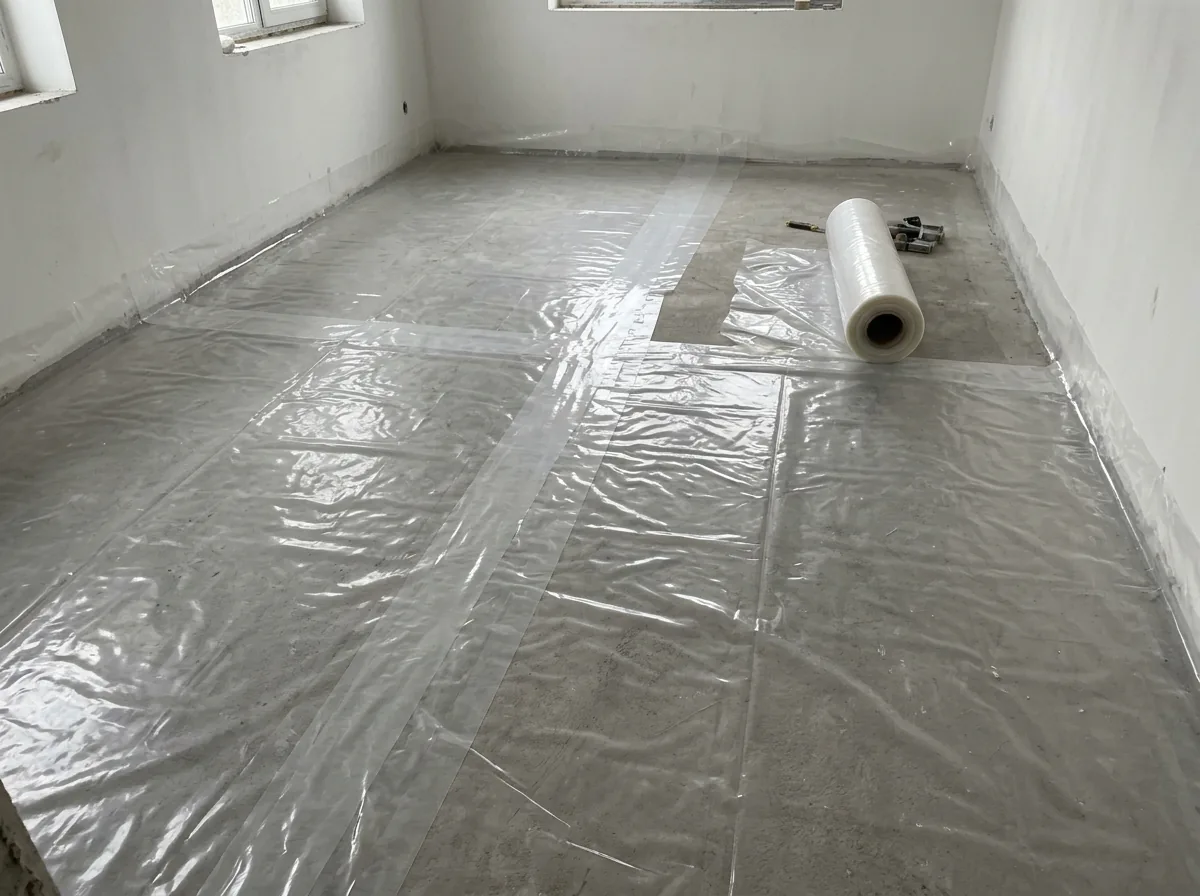
A failed test doesn't always end the project, but it changes the build-up. Wagner notes a "barrier" is really a retarder: it slows vapor, it doesn't stop it. Options depend on the installation method:
- Glue-down: a moisture-retardant sealant the floor maker approves (Provenza); ARDEX requires moisture control if RH tops the floor's or adhesive's limit, or 99%
- Floating: 6 mil polyethylene with seams overlapped 8 inches or more (Pergo)
- Solid on a plywood base: 4 to 6 mil polyethylene, or asphalt felt in mastic, under the plywood (American Hardwood Information Center)
Why Pompano Beach homeowners call Pompano Wood Flooring
- One local flooring contractor calls back, not a bidding list
- Asking costs nothing and commits you to nothing
- Ask for the slab moisture readings in writing
- Florida doesn't license flooring: ask for the business tax receipt and insurance certificates
Why a Slab Gets Tested Even When It Looks Dry
Provenza's instructions say visual checks aren't reliable, and the NWFA's magazine says every on-grade slab has moisture and always will, enough over time to warp, split or curl solid wood. That's why the NWFA recommends engineered wood below grade and why engineered can go on a slab at any grade level. The American Hardwood Information Center allows solid wood on on-grade or upper-floor slabs only with dry concrete, the right subfloor and vapor retarders, and says not to install hardwood at all if tests show too much moisture. Provenza also wants new concrete cured 60 to 90 days, and warns that a slab that tests dry can turn wet at another time of year.
Before the Test: Conditions and the Written Report
A reading only means something if the house was set up right and the report says how it was taken.
Run the AC
Pergo wants the HVAC on for at least 14 days before testing, and indoor humidity held in the range makers set.Name the floor
Choose the product first so the report can be compared with that maker's limit.Get it in writing
Test method (F2170, F1869 or meter), number of test spots, a sketch of where they were, each reading, and the date.Plan the next step
If tile is coming up, test the bare slab after tile removal; if it's uneven, leveling follows the test, since ARDEX says its leveler isn't a vapor barrier (floor leveling).