
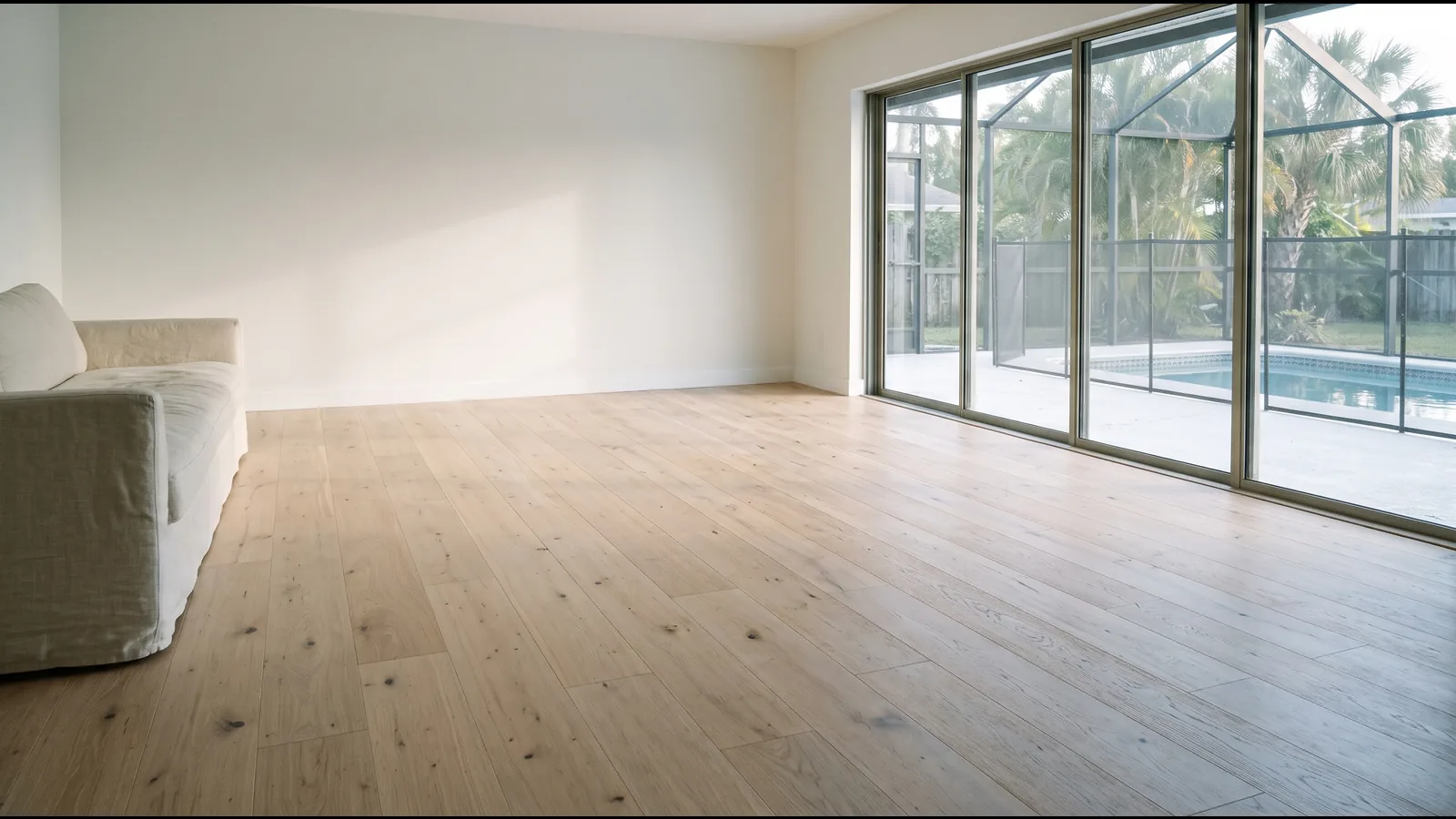
Screen and Recoat Options by Floor Finish
The finish already on the floor decides how a new coat is made to stick. The NWFA's recoating article describes two routes: mechanical adhesion, where the old finish is lightly abraded, and chemical adhesion, where a product from the finish maker prepares the surface without much sanding.
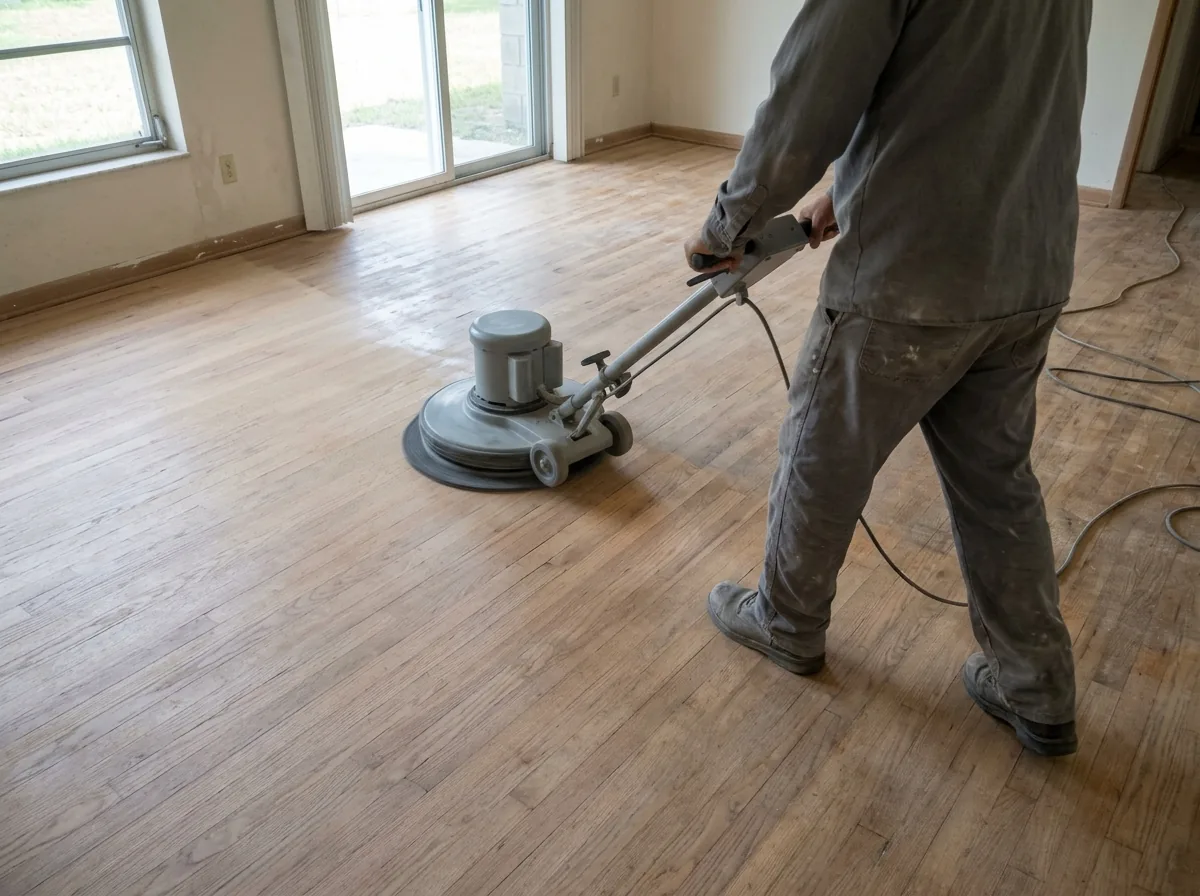
Screen and recoat over site-finished polyurethane
This is the standard job on a floor that was sanded and finished in place. A buffer with a fine screen scuffs the top of the old finish without reaching the wood, the edges are abraded by hand with the same grit, and the dust is vacuumed and tacked off before one fresh coat goes down. Fixr notes that buffing only works over a non-waxed polyurethane finish on wood that isn't damaged or stained.
- Screening (HomeAdvisor, Bob Vila): $1 to $2.50 a square foot.
- Screen or buff and recoat (HomeGuide repair guide): $1 to $3 a square foot.
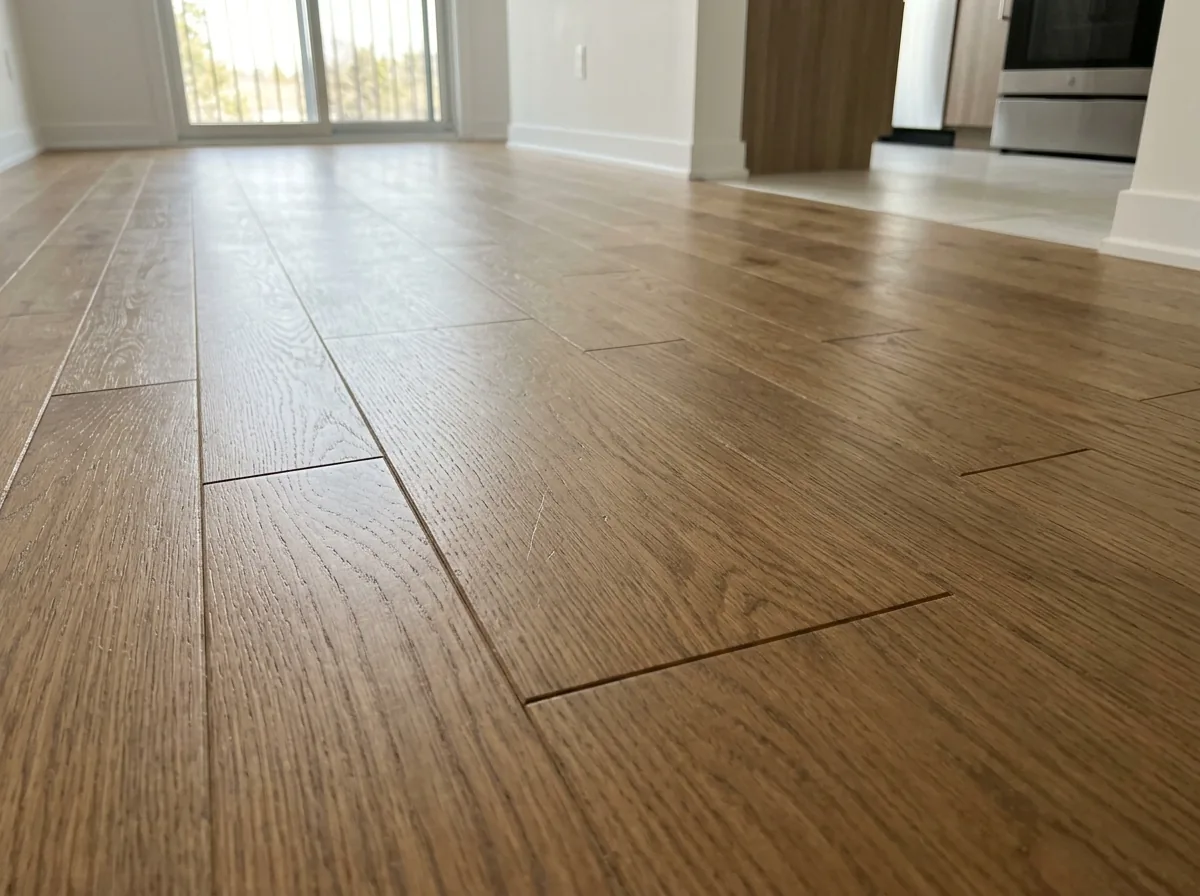
Chemical-bond recoat for prefinished floors
Some factory-finished planks, solid or engineered, carry a high-abrasion finish, and the NWFA article says screening may not be the best way to recoat them. It says these floors may need an approved chemical pre-treatment so the new coat bonds, used as a complete system from one finish maker. Beveled edges are a second reason, since a buffer can't reach into the groove between boards. Ask for the marker test before anything is scheduled. If permanent marker wipes clean off the finish, it contains Teflon and can't be recoated.
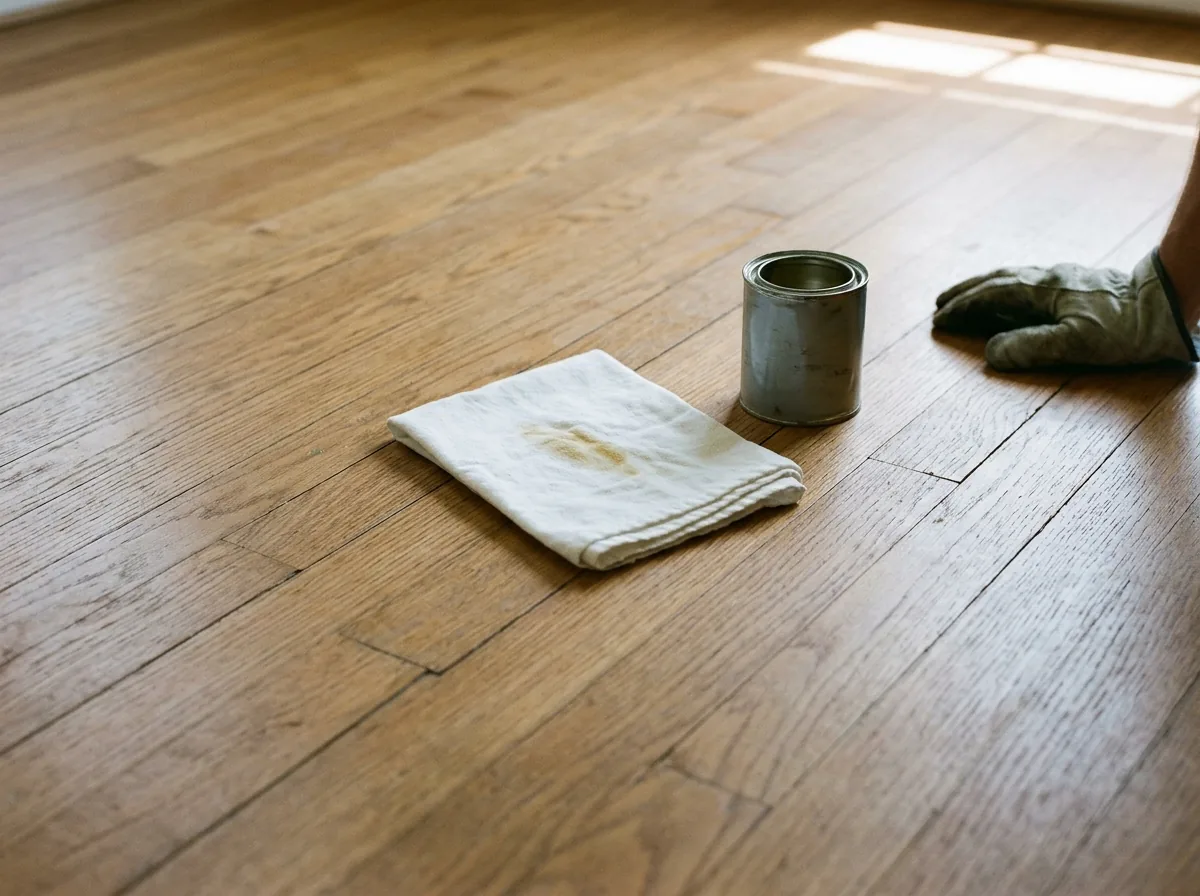
Waxed floors: rewax instead of recoating
Some older floors were finished with paste wax rather than polyurethane, and wax is one of the contaminants the NWFA article names as blocking adhesion. It gives two field checks: mineral spirits on a white rag that picks up a yellow or brown tint, or water drops that leave white spots after about 10 minutes. For a waxed floor its advice is to rewax where possible. Even sanding to bare wood leaves wax in the seams and soft grain, so a wax finish again is the safe choice.
Recoat-only stairs
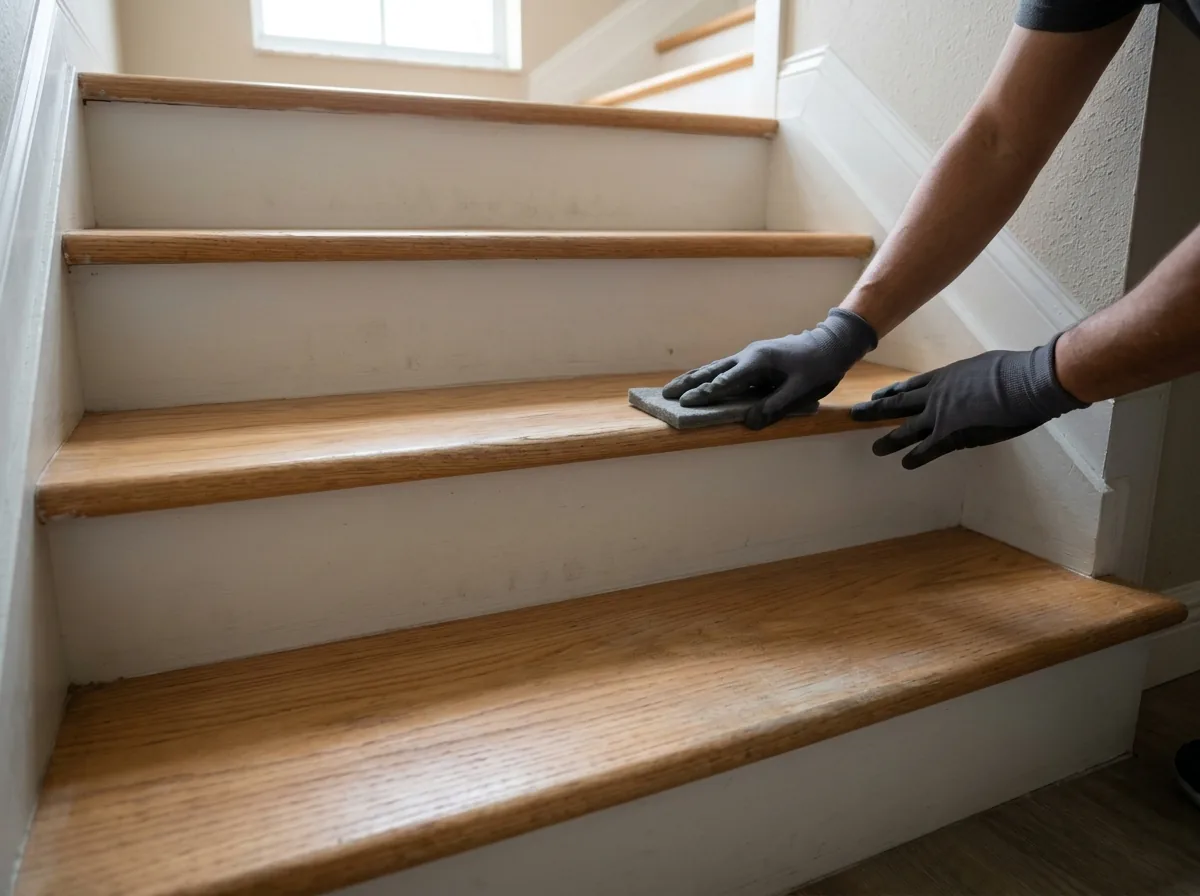
Stair treads can take the same maintenance coat when the finish is dull but intact. There is no open floor for a buffer, so each tread, nosing and corner is abraded by hand before the coat. Check the front edges first: treads worn to bare wood there are a wear pattern, and the NWFA article warns that wear patterns take a new coat differently. Those stairs need sanding, priced per step on the stair refinishing page.
Why Pompano Beach homeowners call Pompano Wood Flooring
- One local flooring contractor calls back, not a bidding list
- Asking costs nothing and commits you to nothing
- Ask for the slab moisture readings in writing
- Florida doesn't license flooring: ask for the business tax receipt and insurance certificates
Recoat Limits: When the Floor Needs More
A new coat protects what's there. It doesn't remove anything, and the NWFA's recoating article is plain about the limits:
Dents, gouges and scratches
They stay in the surface and can look worse under fresh finish.Traffic lanes worn to bare wood
They take the new coat differently and stay visible unless they're dealt with first.Cupped boards
A permanently cupped floor can be recoated but stays cupped. The cause comes first (water-damaged floors).Gray or stained wood
Fixr limits buffing to floors that aren't damaged or stained under the finish. That floor needs a full sand and refinish.
Recoat Tests to Ask for Before Booking
- 1
Clean with the finish maker's cleaner
The floor gets cleaned with a product the finish manufacturer recommends, and that includes dirt in the bevels, gaps and open knots, per the NWFA article.
- 2
Check several spots for wax, polish and grease
Test spots belong on the main part of the floor, not in a closet or under a rug, because maintenance products go where people walk. Acrylic polish shows as milky white spots about two minutes after a drop of ammonia or polish stripper, and it has to come off completely before any new finish.
- 3
Coat a test patch and run the X-cut tape test
Once a sample of the new finish is down and dry, two crossed cuts through the coating and a strip of tape show whether it lifts. The test marks that spot, so expect a small blemish where it was done.
- 4
Recoat the floor and plan around the cure
A recoat restores the floor without moving everyone out for a resanding, the NWFA article points out. NWFA care guidelines still keep rugs off a newly finished floor for at least seven days, so plan furniture and rugs around that.