
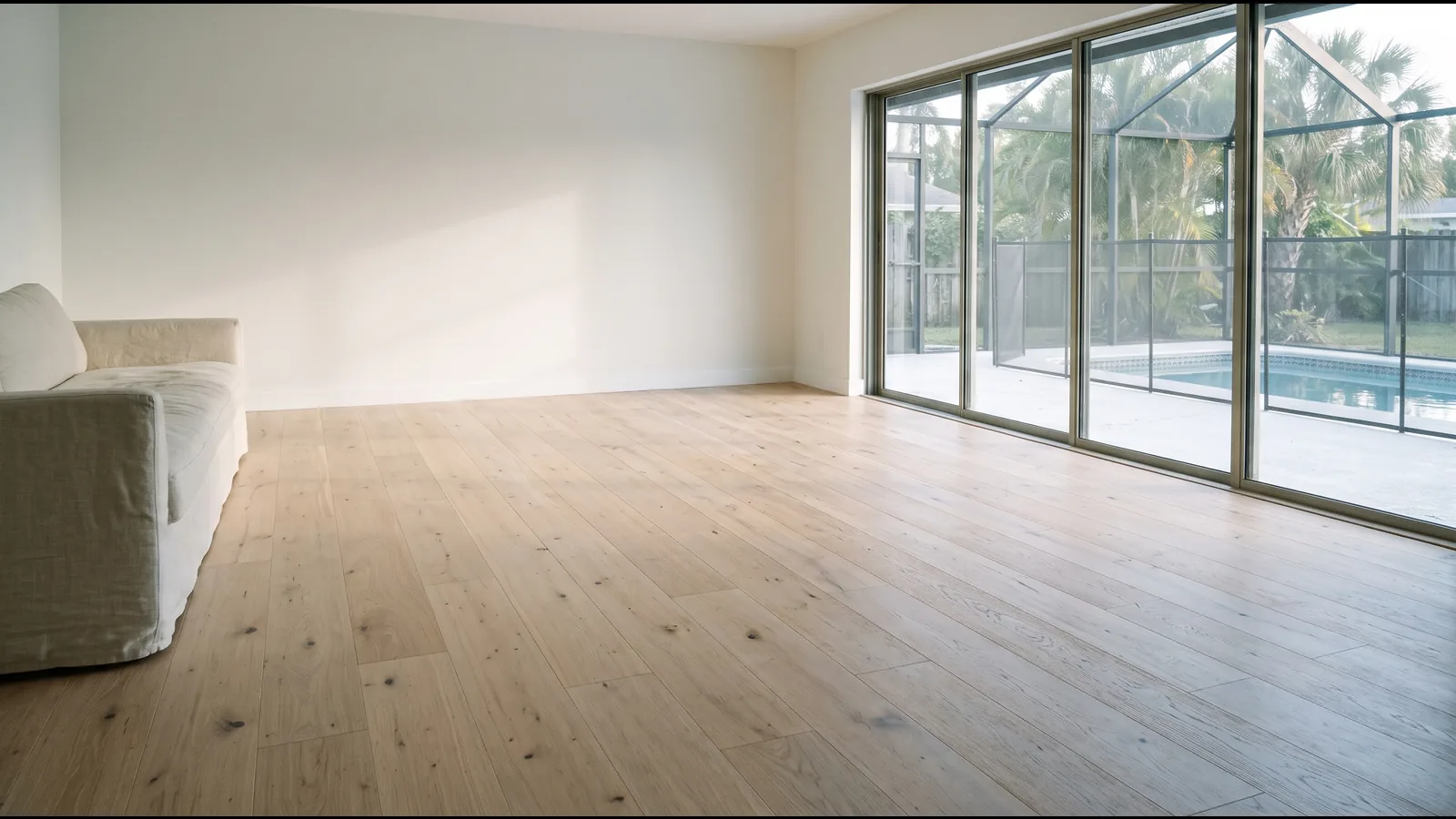
Herringbone Wood Floor Layouts and Install Methods
Herringbone is a layout, not a species: the same oak can go down as classic herringbone, chevron or a bordered field, and glued or nailed. The four options below price and install differently.
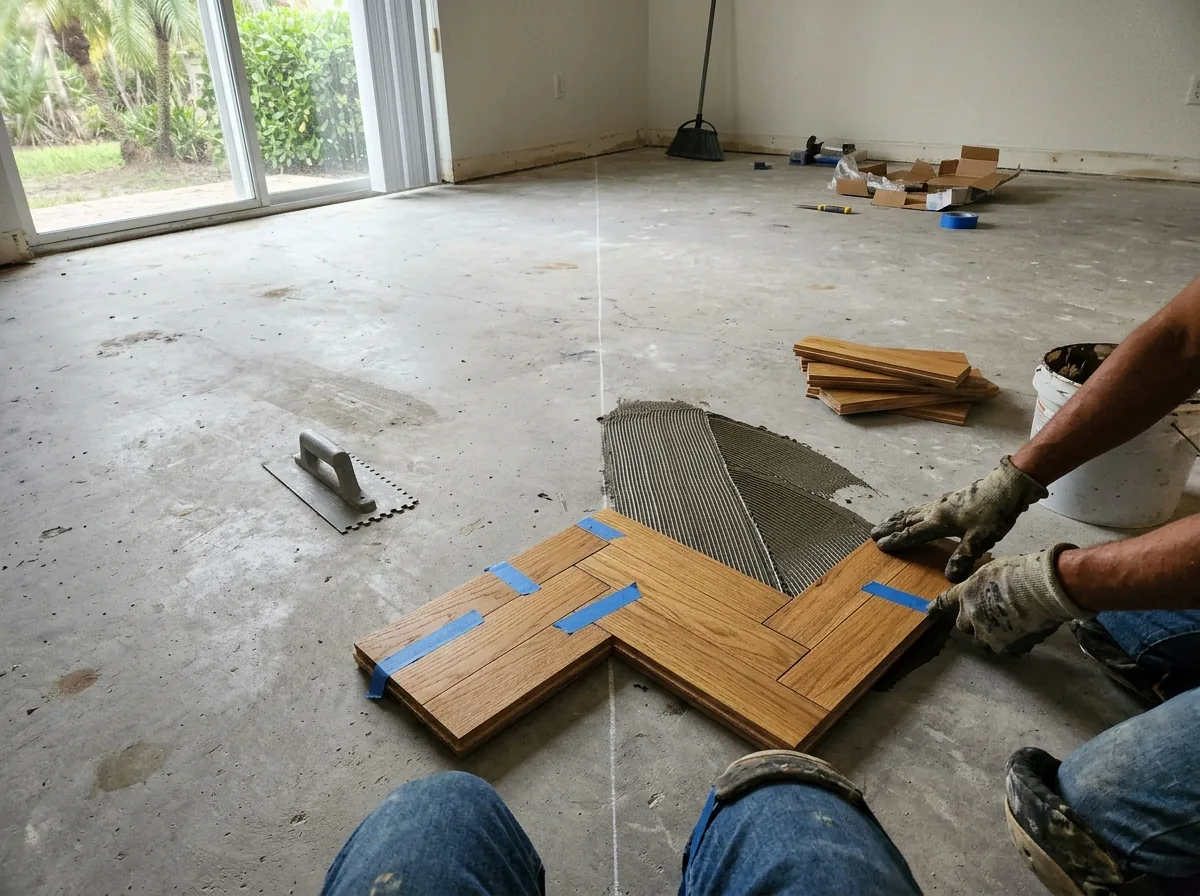
Classic herringbone, glued down
Classic herringbone uses plain rectangular blocks set at right angles, each one butting into the side of the next in a broken zigzag. That's how Robbins, a flooring maker, describes it. The blocks come as two mirror-image types. One maker's sheet calls for a run of left-tongue planks and a run of right-tongue planks either side of a line through the center of the room. It allows glue-down only for its herringbone, calls subfloor flatness "critical", and says blue tape should hold the blocks while the adhesive grabs. On a slab, ask for a moisture test before the glue goes down.
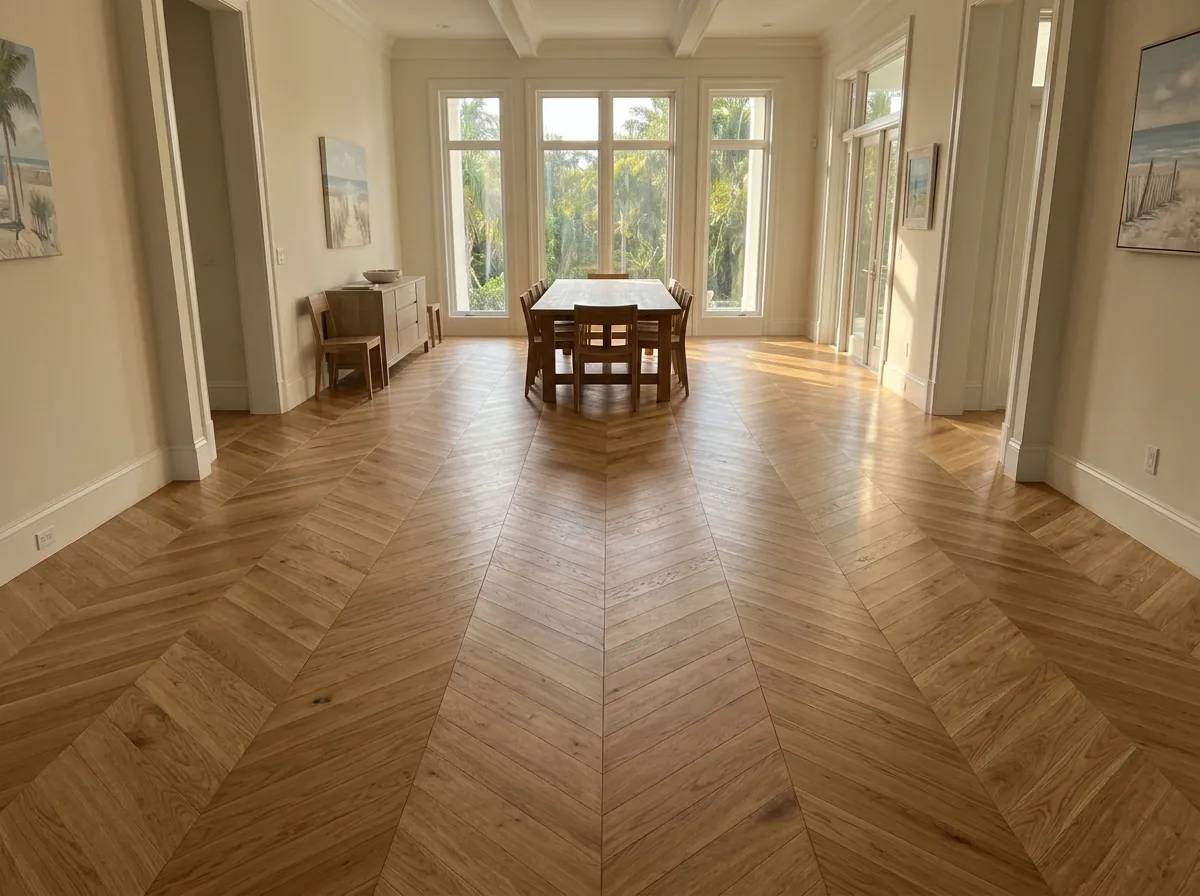
Chevron wood floor
Chevron looks close to herringbone but the boards are different. Robbins says each chevron plank is cut at an angle on both ends, typically 45 degrees, so the ends meet in a point and form one continuous "V" across the room. It rates chevron the harder of the two to install and the more expensive. So chevron needs its own angle-cut planks, and the pattern has to be settled before the wood is ordered.
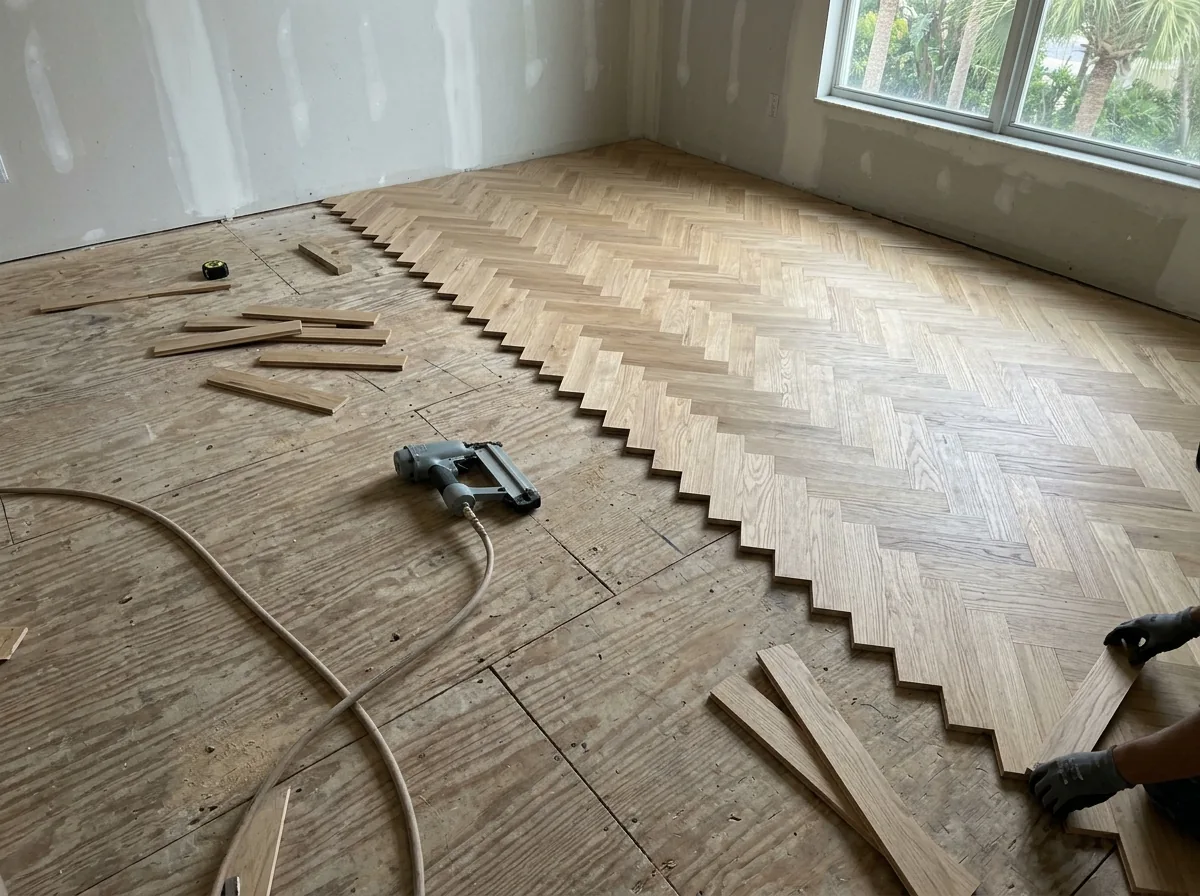
Nailed solid herringbone over plywood
Over a wood subfloor, the pattern can be fastened instead of glued. Fixr describes herringbone jobs secured with wood glue and nails. One maker allows nail-down, or glue and nail together, only for its herringbone boards 3/4 inch thick and up; thinner boards must be glued. That makes this the route for an upper floor framed in plywood, using the same solid hardwood subfloor rules.
Herringbone with a border
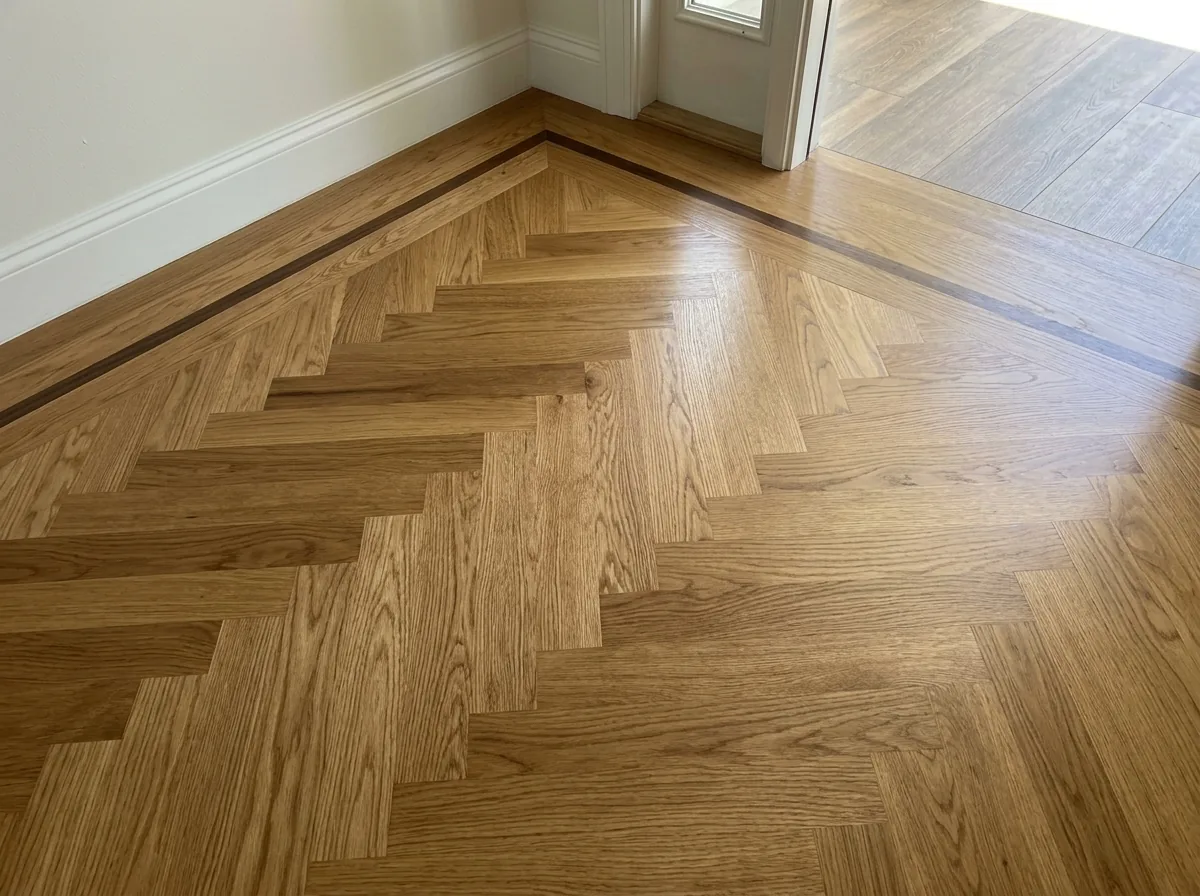
A border turns a pattern into a framed rug of wood. This Old House frames its herringbone field with feature and apron strips, cut to fit the room, so the zigzag never runs raggedly into a wall. A border also gives the pattern somewhere tidy to stop at a doorway. Ask how wide the border is, whether it uses a contrasting wood, and whether it's priced as its own line.
Why Pompano Beach homeowners call Pompano Wood Flooring
- One local flooring contractor calls back, not a bidding list
- Asking costs nothing and commits you to nothing
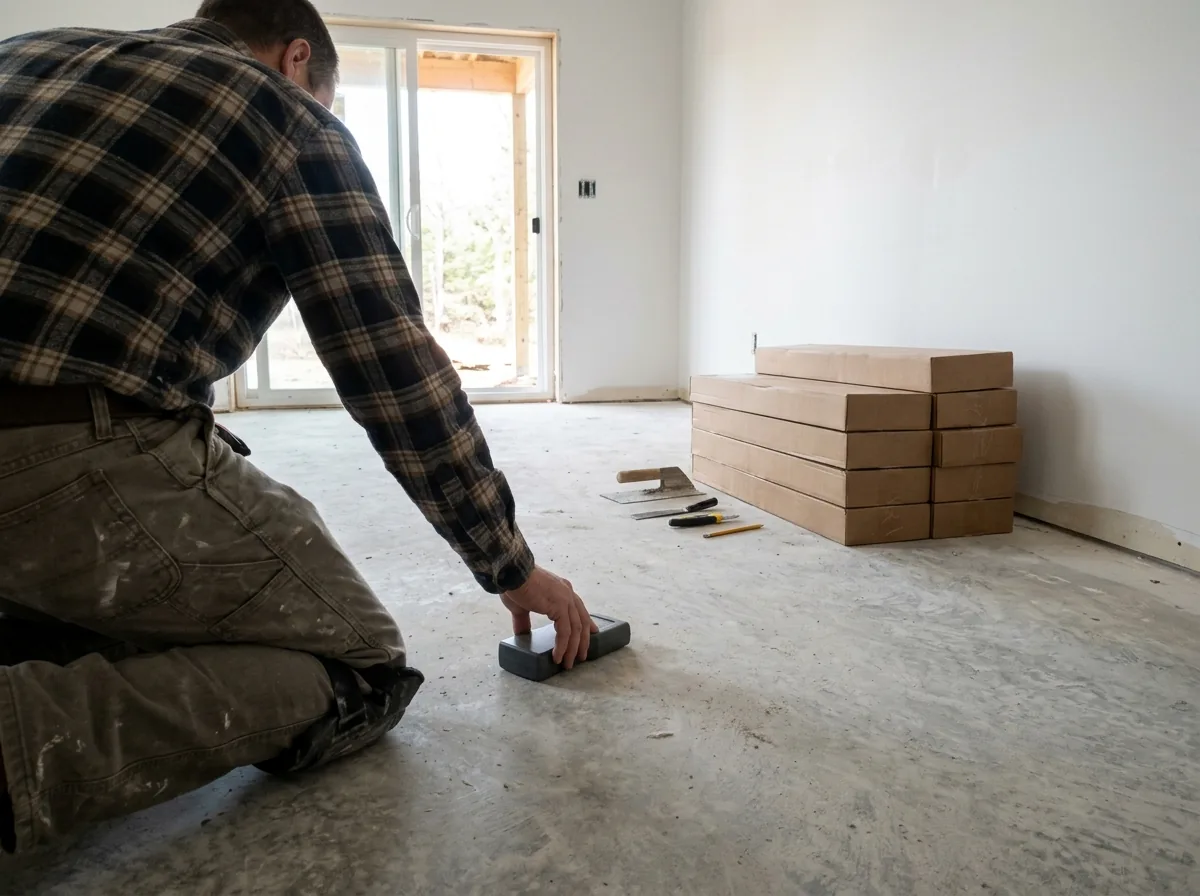
- Ask for the slab moisture readings in writing
- Florida doesn't license flooring: ask for the business tax receipt and insurance certificates
What Changes the Price of a Herringbone Floor
HomeGuide's checklist for hiring a floor installer asks outright what they charge to lay herringbone, which tells you it's quoted separately. These are the lines that move it:
Pattern labor
The 30% premium Bob Vila cites, or a separate per-square-foot rate. Chevron usually sits higher.Waste allowance
At least 15% extra wood, per This Old House. Check that the quantity on the quote covers it.Room shape
HomeGuide notes installers raise the price when many angles and obstacles mean precise cutting. Closets, columns and angled walls all add cuts.Flat floor
A pattern shows every dip, so ask whether floor leveling is included or extra.Indoor humidity
One herringbone maker wants 45% to 55% relative humidity in the room and never below 30% or above 60%. A closed-up house with the AC off can drift past that.
See parquet flooring for block patterns and older parquet.