
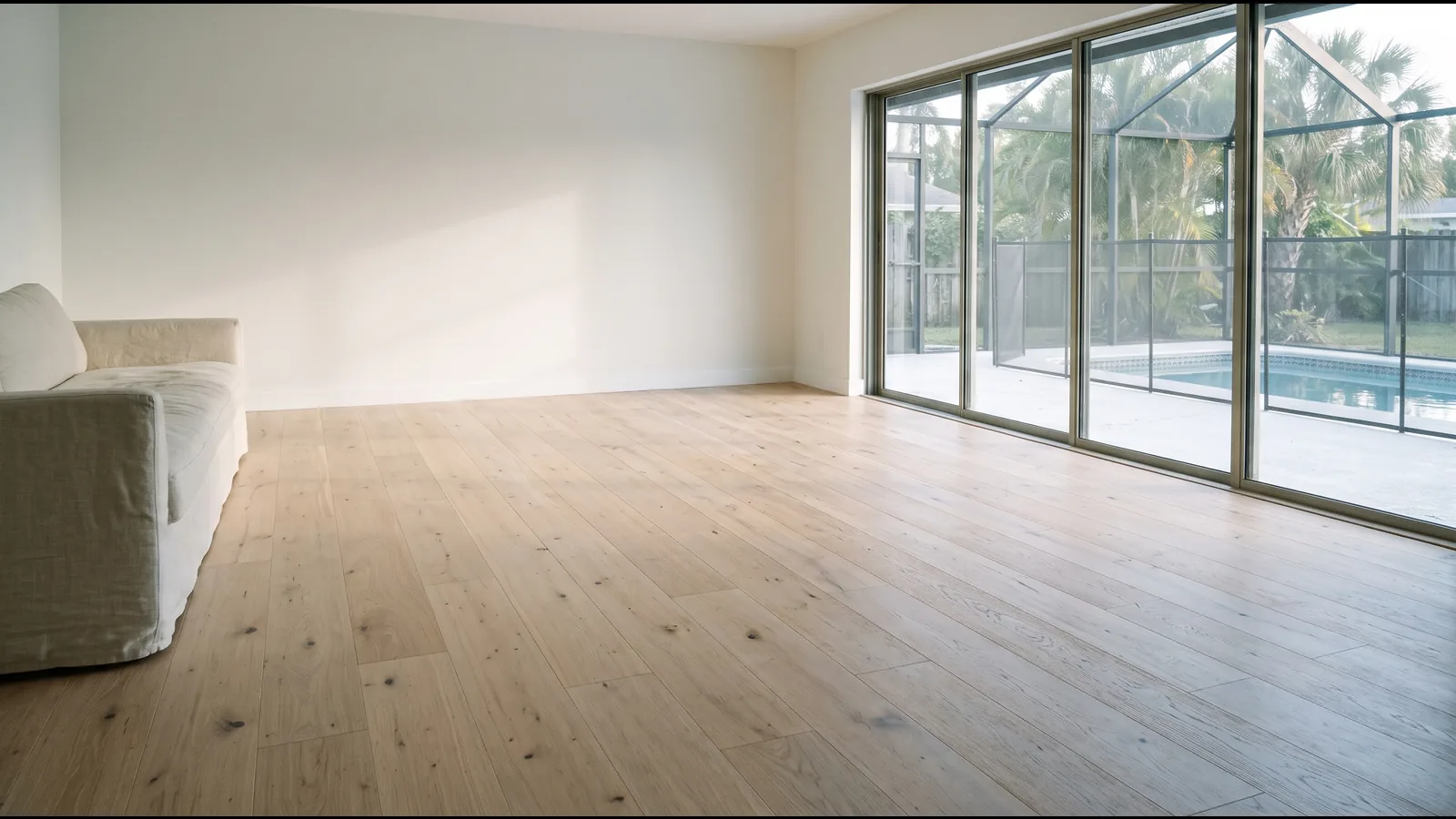
Solid Hardwood Flooring Installation Methods by Subfloor
Solid boards are one piece of wood from face to back, so what they get fastened to decides most of the price and most of the risk. Here are the four setups a quote will name.
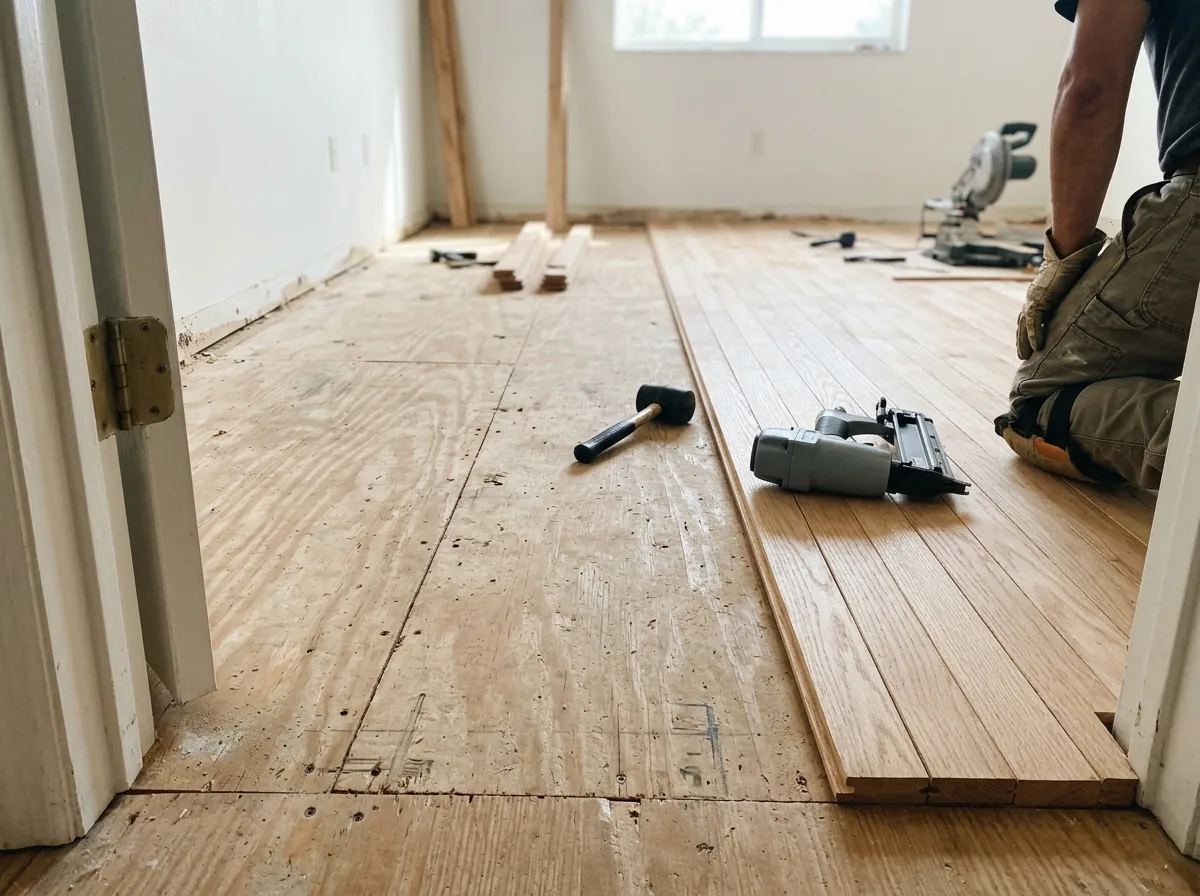
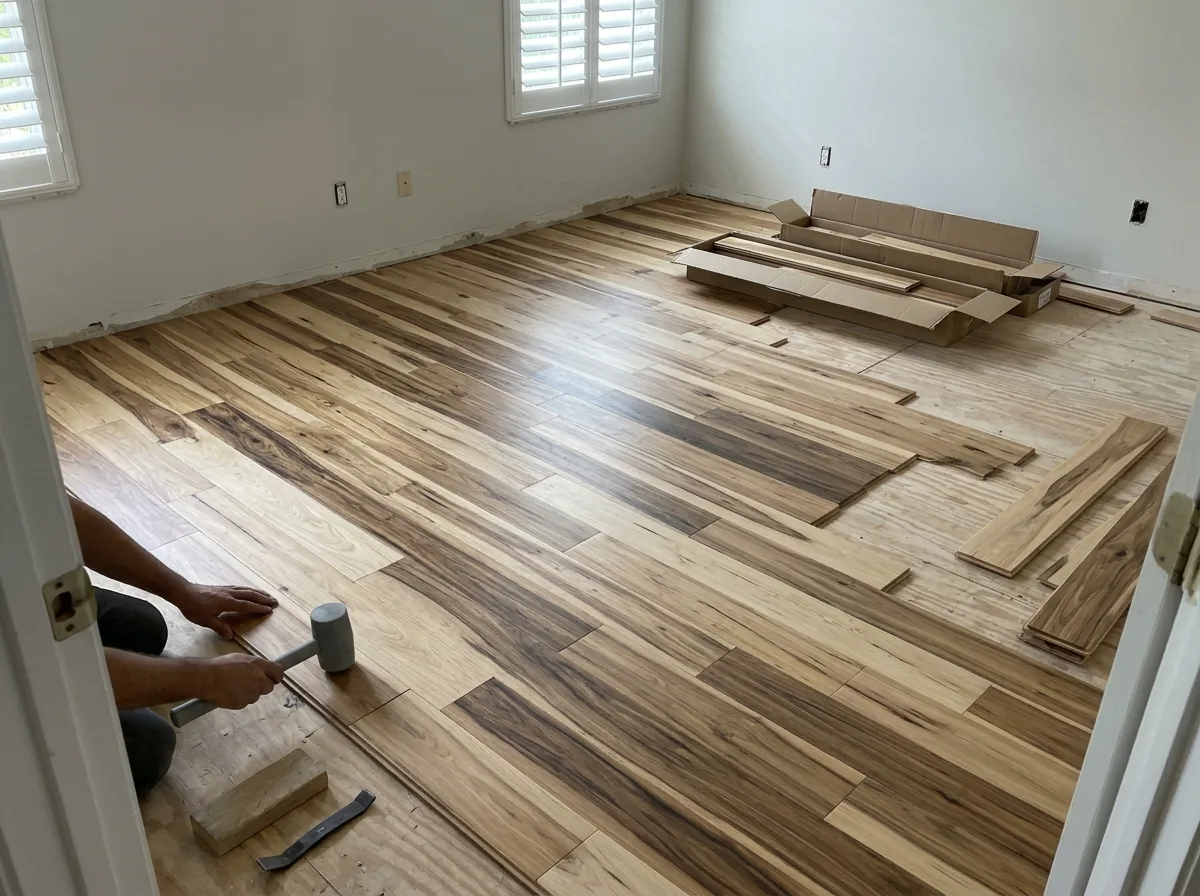
Nail-down solid hardwood over plywood
Nailing is the standard way to hold solid wood, and HomeGuide calls it the cheapest of the three methods, with glue-down costing more. The boards are fastened through the tongue with flooring nails or staples. The catch, HomeGuide adds, is that a nailed floor can be noisy and is hard to lift later. The subfloor matters as much as the wood:
- Preferred subfloor (one maker's sheet): 3/4-inch CDX plywood or OSB, joists 19.2 inches apart or closer.
- Minimum: 5/8-inch CDX plywood with joists no more than 16 inches apart; wider spacing needs a second layer to reach 1-1/8 inches.
- Fastening: blind nails at 45 degrees through the tongue, every 6 to 8 inches.
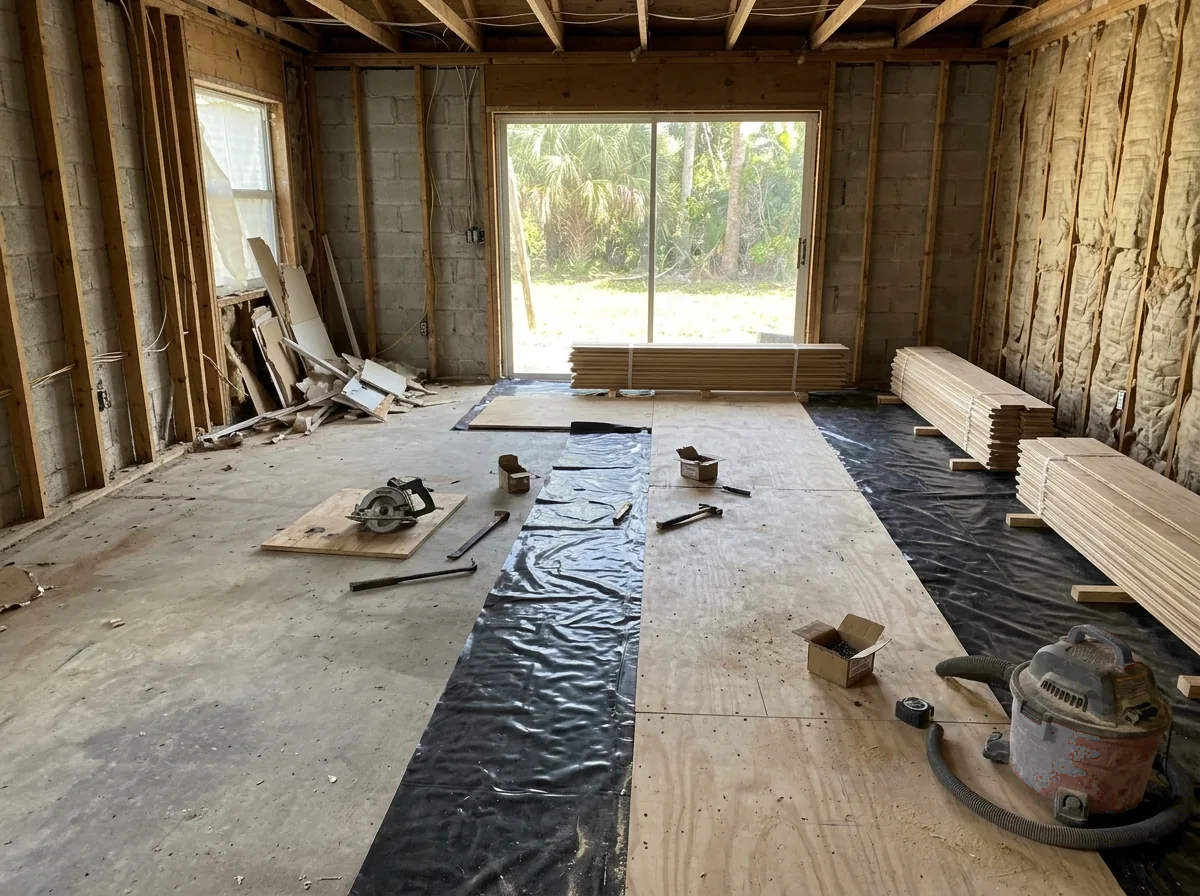
Solid hardwood on a concrete slab
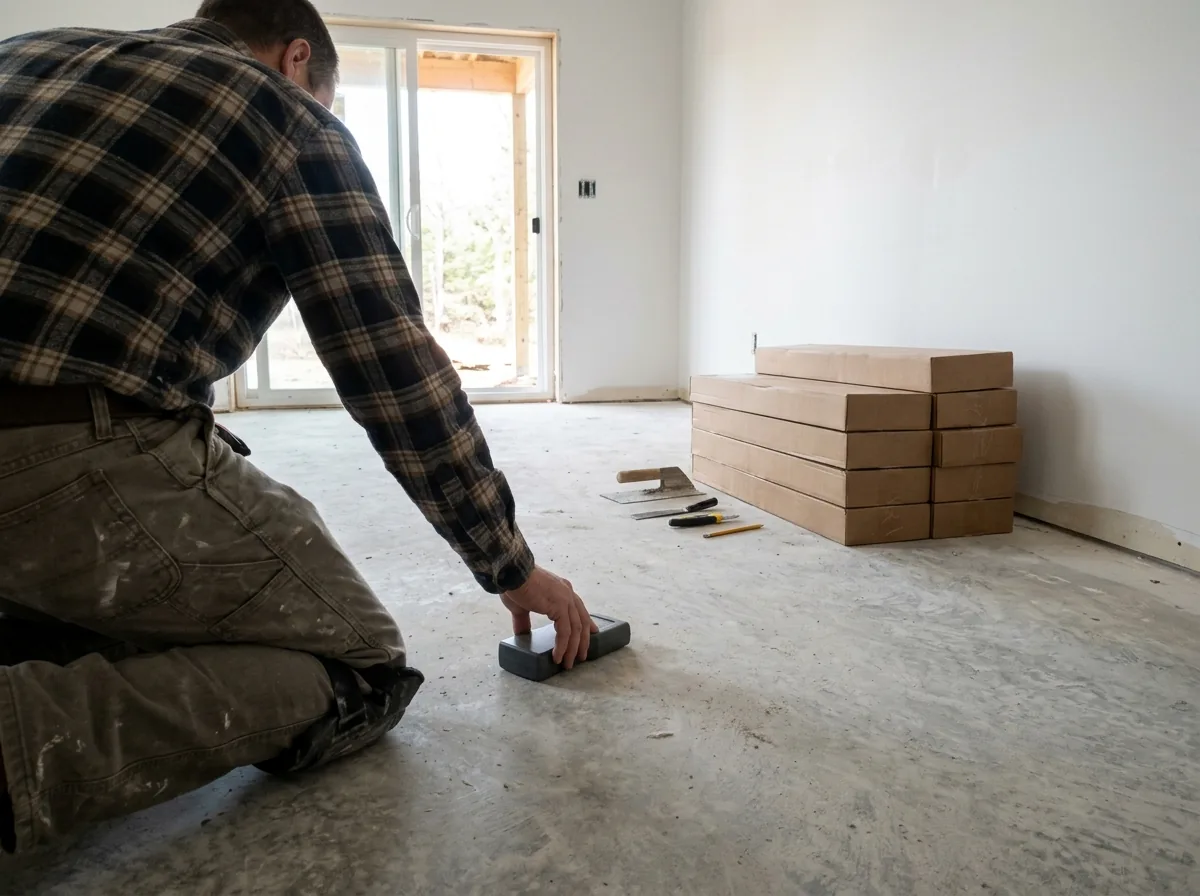
Solid wood can go over a ground-level slab, but not straight onto it. The American Hardwood Information Center allows it on dry concrete with the right subfloor and vapor retarder, and says not to install at all if the moisture tests fail. Aacer's 3/4-inch instructions want a nailing surface fastened to the slab first, and forbid gluing its solid boards to any subfloor. HomeGuide says glue-down suits "certain types" of solid, so the sheet for your exact boards decides. Ask for the results of a slab moisture test before anything is ordered.
- Slab age (Aacer): at least 60 days old before the wood goes in.
- Moisture: Aacer wants all concrete tested, noting that "visual checks are not reliable."
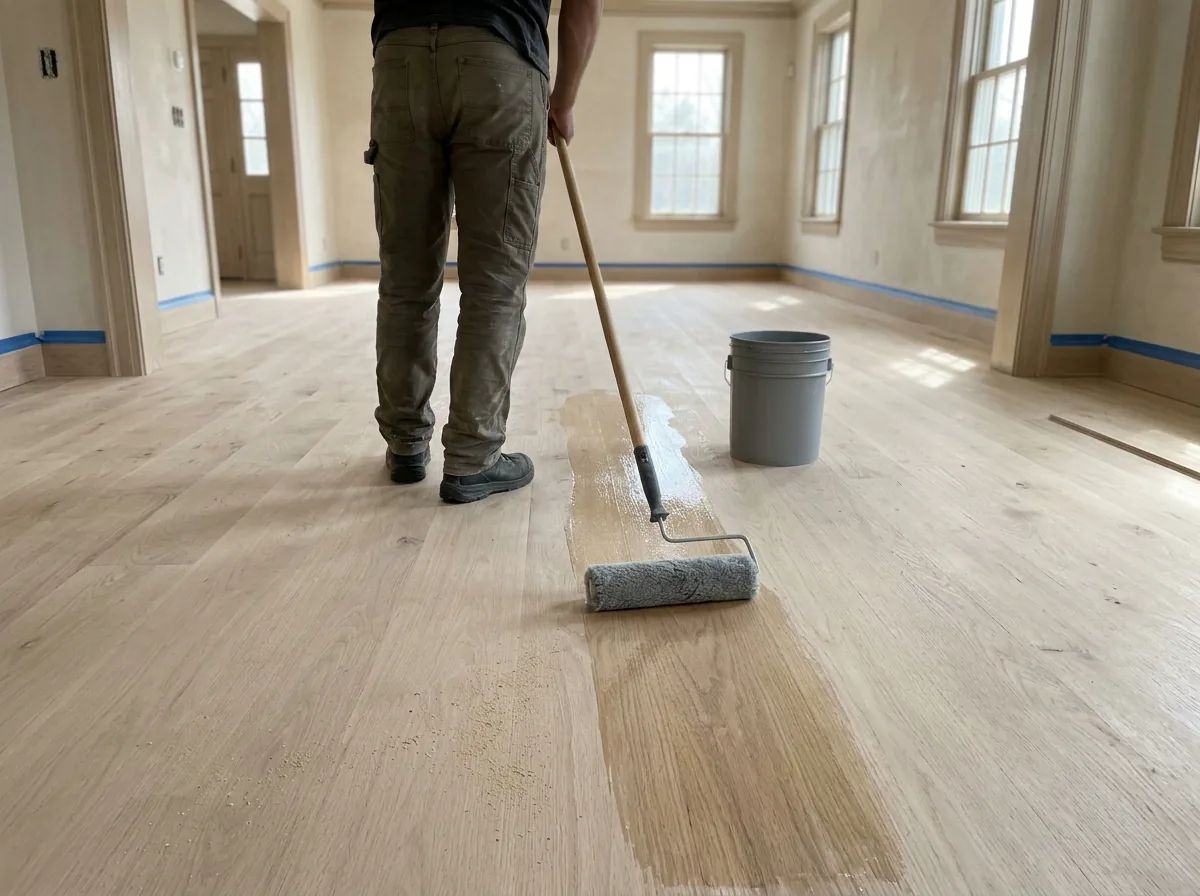
Site-finished solid boards
Raw boards are nailed down bare, then sanded, stained and coated in the room. Fixr notes they can take any surface or penetrating finish, and that unfinished wood is graded partly on looks. The trade-off is labor and fumes in an occupied house. Fixr recommends prefinished for remodels where the family is living at home, partly to limit VOC exposure, and warns that a site-finished floor is only as even as the crew's skill. Drying and cure times depend on the finish; see the refinishing page.
- Raw planks (Fixr, materials): $2 to $6 a square foot.
- Extra labor to finish on site (Bob Vila): $2 to $7 a square foot.
Prefinished solid hardwood
Factory-finished boards cost about $2 a square foot more to buy, by Bob Vila's figures, but there is no sanding or drying once they're down: the room can be walked on as soon as the last row goes in. Bob Vila also says factory-cured finishes are usually tougher than ones brushed on in the house. Fixr found the two routes end up close: $2,200 to $4,000 for 300 square feet either way, installed.
Why Pompano Beach homeowners call Pompano Wood Flooring
- One local flooring contractor calls back, not a bidding list
- Asking costs nothing and commits you to nothing
- Ask for the slab moisture readings in writing
- Florida doesn't license flooring: ask for the business tax receipt and insurance certificates
How Long Solid Hardwood Lasts, and How Often It Can Be Sanded
Solid wood's case is its life span. The National Association of Home Builders' 2007 study of home components gave natural wood floors 100 years or more and engineered wood 50 or more. The study is old, but no newer national figure turned up. A solid floor stays usable for that long because it can be sanded back to clean wood again and again: HomeGuide expects 4 to 10 refinishes over its life.
What shortens it here is humidity. HomeGuide notes that solid moves more than engineered as the air gets wetter and drier. Keep the house in the humidity band the makers set, AC running, even when nobody's home.
What to Get in Writing on a Solid Hardwood Quote
HomeGuide's question list for hiring a flooring installer is a good base. Make sure the estimate answers each of these before you sign:
Species and grade
Which wood and which grade are priced. For hardness, compare white oak with the harder imported species.Thickness
The board thickness in the price, since Bob Vila's figures run from $2 a square foot for 1/4-inch boards to $15 for 3/4-inch.Subfloor work
Whether plywood repairs or a nailing surface over the slab are included. HomeAdvisor puts subfloor repairs at $900 to $3,000 extra.Tear-out
Removal and haul-away of the old floor, which HomeGuide puts at $1.50 to $3.50 a square foot.Paperwork
The city Business Tax Receipt number and certificates of insurance (why there's no flooring license), plus a written payment schedule with the deposit and each stage payment.
See white oak flooring.